
Data Destruction Certificate: Surprising Practical Gaps
Discover the data destruction certificate essentials, common gaps in compliance, and how to protect your organization from data security risks.

Introduction
Key Takeaways
- A data destruction certificate serves as formal proof that sensitive information has been permanently eliminated from storage media
- Many organizations hold certificates that wouldn't withstand regulatory scrutiny due to missing critical elements
- Understanding the required components of a valid certificate is essential for maintaining compliance and protecting against data breaches
- Common gaps in certificates can expose organizations to significant legal and financial risks
- Following recognized standards ensures certificates provide genuine protection rather than false security
In today's data-driven business environment, the secure disposal of sensitive information has become a critical compliance requirement. Organizations across industries are required to demonstrate that retired storage devices—from hard drives to solid-state drives—have been properly sanitized before disposal or repurposing. This is where a data destruction certificate becomes essential.
A data destruction certificate is formal documentation that verifies data has been permanently removed from storage media and rendered unrecoverable. At a recent industry conference, I found myself in a discussion with a compliance officer who shared an alarming reality: a significant percentage of businesses hold certificates that wouldn't hold up under an audit. It struck me how easy it is for companies to assume they're covered just because they have a piece of paper labeled 'certificate of destruction.'
The problem isn't simply about having a certificate—it's about having one that meets rigorous standards and contains all necessary elements. Data destruction is the secure and permanent elimination of data from storage media so that it can never be accessed again. Yet many organizations discover too late that their certificates lack critical details such as serial numbers, destruction methods, or proper authentication signatures.
The Growing Importance of Proper Documentation
Regulatory frameworks like GDPR, HIPAA, and various data protection laws now require organizations to maintain detailed records of how they dispose of sensitive information. A certificate of data destruction serves multiple purposes: it provides an audit trail, demonstrates due diligence, and offers legal protection in the event of a data breach investigation.
However, not all certificates are created equal. Only certified data destruction performed according to recognized standards ensures that data is permanently unrecoverable. The gap between what organizations think they have and what auditors expect to see can be substantial—and the consequences of that gap can include regulatory fines, failed audits, and compromised data security.
This article explores the essential elements that make a data destruction certificate valid, identifies the most common gaps that auditors flag, and provides practical guidance for ensuring your organization's certificates provide genuine protection rather than a false sense of security.
Sources
Learn about the certificate of data destruction, its essential elements, and common gaps that could jeopardize your data security.
Focus keyword: data destruction certificateTone: professional
Table of Contents
- Introduction — Introduce the concept of a certificate of data destruction and highlight its importance in data security compliance.
- Table of Contents
- What Is a Certificate of Data Destruction? — Define the certificate of data destruction and explain its purpose in the context of data security.
- Required Elements of a Valid Certificate — Detail the necessary components that should be included in a valid certificate as per standards.
- Common Gaps in Data Destruction Certificates — Identify and explain seven common gaps that auditors flag in data destruction certificates.
- Consequences of Incomplete Certificates — Discuss the potential risks and consequences of having an incomplete or invalid certificate of data destruction.
- Best Practices for Obtaining Certificates — Provide recommendations for businesses on how to ensure their certificates of data destruction are valid.
- Conclusion — Summarize the key points discussed and reinforce the importance of understanding the elements of a certificate of data destruction.
8 sections
What Is a Certificate of Data Destruction?
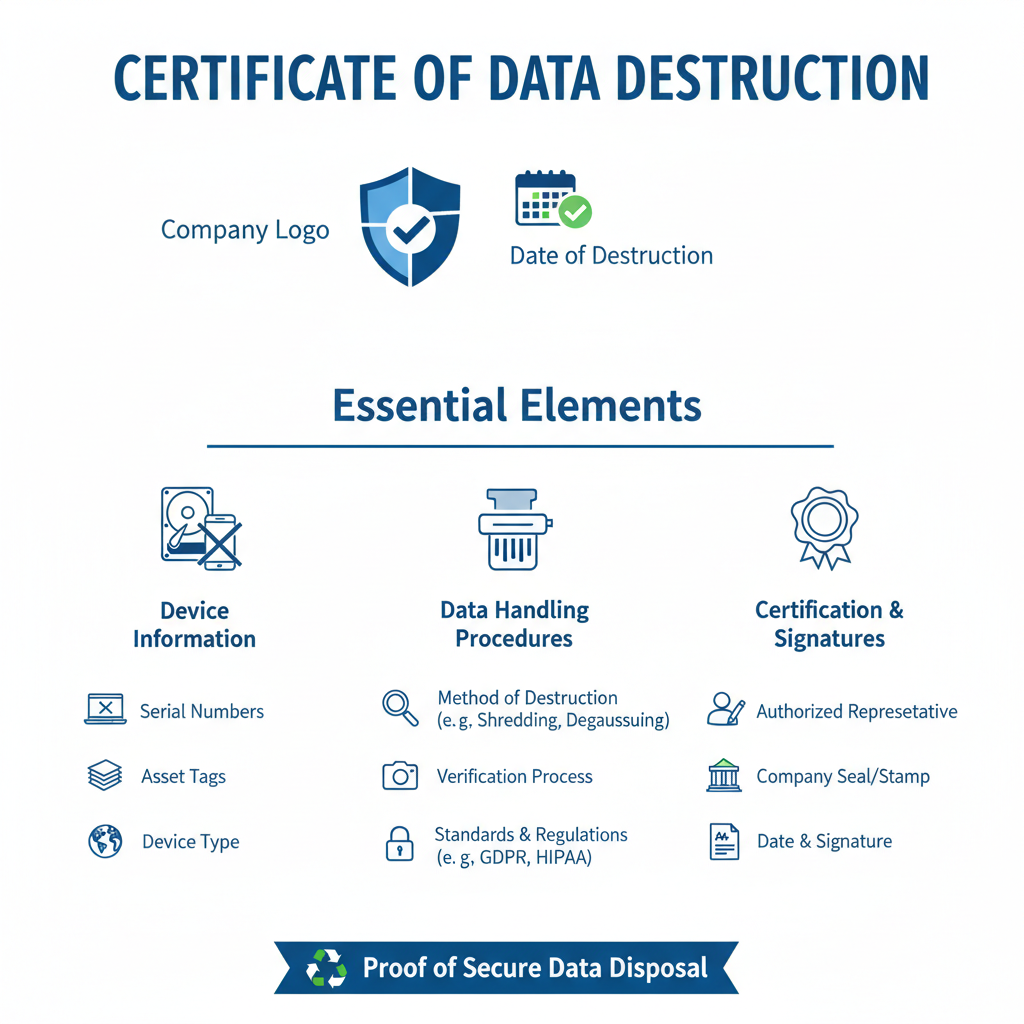
A data destruction certificate is a formal document that provides verifiable proof that data stored on physical media has been permanently eliminated. This certificate serves as an official record that sensitive information—whether on hard drives, SSDs, mobile devices, or other storage equipment—can never be recovered or accessed again.
Organizations rely on these certificates to demonstrate compliance with data protection regulations and internal security policies. When hardware reaches end-of-life or needs to be decommissioned, the certificate becomes the primary evidence that proper data sanitization procedures were followed.
The Core Purpose of Data Destruction Certificates
The certificate fulfills several critical functions in the data security lifecycle. First, it establishes a clear chain of custody, documenting who handled the equipment and when the destruction occurred. Second, it provides legal protection by proving that an organization took reasonable steps to protect sensitive information.
Third, the certificate serves as an audit trail during compliance reviews. Regulators and auditors expect to see documented evidence that data was destroyed according to recognized standards. Without this documentation, organizations may face penalties even if proper destruction methods were actually used.
Certified Data Destruction vs. Standard Disposal
Not all data destruction creates equal security outcomes. Standard disposal methods—such as deleting files or reformatting drives—leave data recoverable through forensic tools. Only certified data destruction performed according to recognized standards ensures that data is permanently unrecoverable.
The certificate itself represents more than just a receipt for services rendered. It's a technical attestation that specific destruction methods were applied and verified. The document should detail the destruction methodology, identify the assets processed, and confirm that the procedures align with industry standards.
Who Issues These Certificates?
Data destruction certificates are typically issued by specialized service providers who perform the actual destruction work. These vendors may use physical destruction methods like shredding or degaussing, or they may employ advanced software-based sanitization techniques.
The credibility of the certificate depends heavily on the provider's certifications and adherence to established guidelines. Reputable vendors follow frameworks that define proper destruction procedures and documentation requirements. The certificate's value lies not just in its existence, but in the rigor of the processes it represents.
Sources
Required Elements of a Valid Certificate
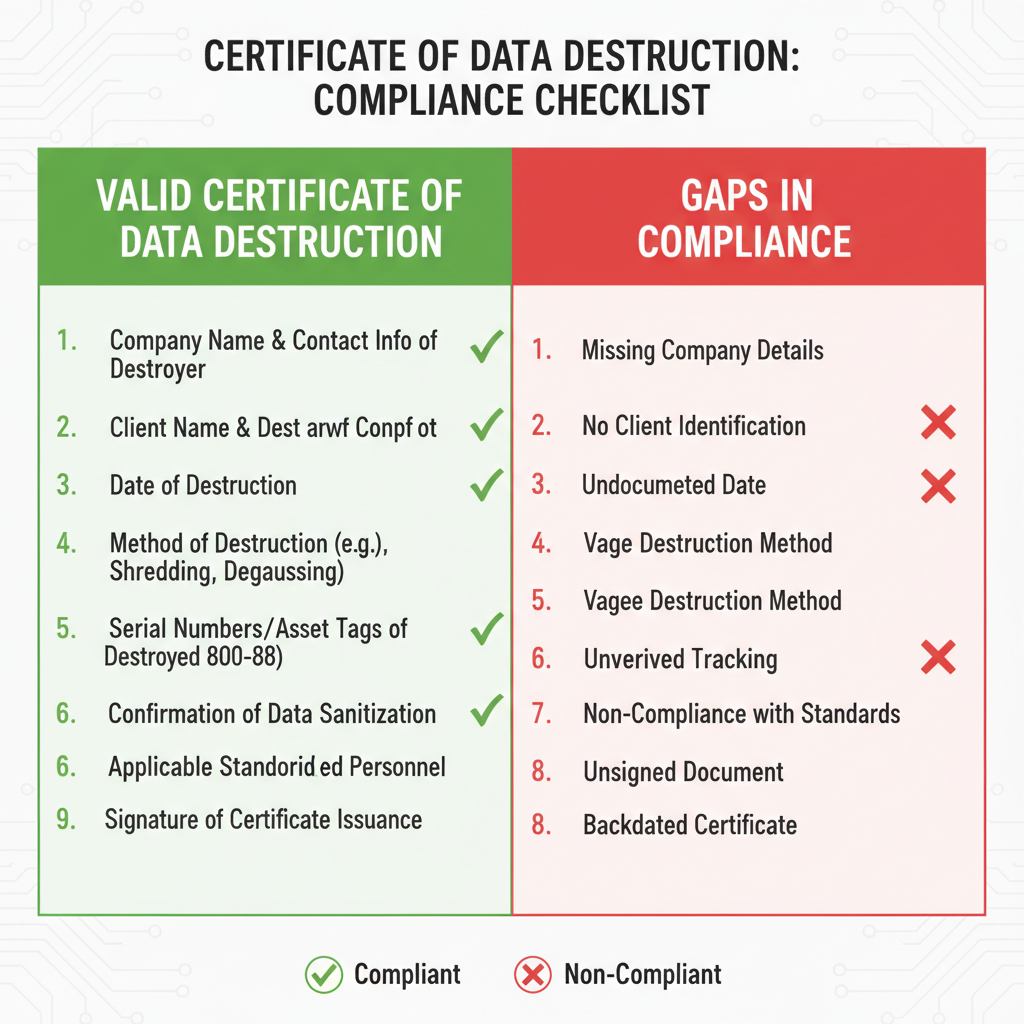
A valid data destruction certificate serves as your organization's proof of compliance and due diligence. Without the right components, that certificate becomes little more than decorative paperwork. Understanding what must be included ensures your documentation can withstand scrutiny during audits and regulatory reviews.
Core Identification Information
Every certificate must begin with clear identification details. This includes the date and time of destruction, which establishes a precise timeline for compliance purposes. The destruction method used—whether Clear, Purge, or Destroy—must be explicitly stated, as each method corresponds to different security levels and regulatory requirements.
Serial numbers of all devices processed form another critical element. This granular tracking ties each piece of hardware to the destruction event, creating an unbreakable chain of accountability. Without serial number documentation, you cannot definitively prove which specific assets were sanitized.
Personnel and Certification Details
The certificate should identify the technician who performed the destruction by name. This personal accountability ensures someone can answer questions about the process if issues arise later. Company certification details must also appear prominently, demonstrating that the service provider holds relevant industry credentials.
Chain of custody documentation rounds out the personnel requirements. This record tracks who handled the assets from the moment they left your facility until destruction was complete. Any gaps in custody records raise red flags during compliance reviews.
Verification and Tracking Components
Modern certificates include verification logs that provide technical proof of data sanitization. These logs contain the actual output from wiping software or destruction equipment, offering evidence beyond simple attestation. Wipe reports, when applicable, show pass/fail results for each device processed.
Serialized asset tracking ties everything together. This system connects your internal asset management records to the destruction event, creating a complete audit trail. Device serial number tracking ensures no hardware slips through the cracks unaccounted for.
Without these elements working in concert, your data destruction certificate cannot fulfill its intended purpose of proving compliance and protecting your organization from liability.
Sources
- NIST 800-88 Explained: Clear, Purge & Destroy (2026)
- Data Destruction Guidelines & Standards 2026 | NIST, DoD, ISO ...
Common Gaps in Data Destruction Certificates
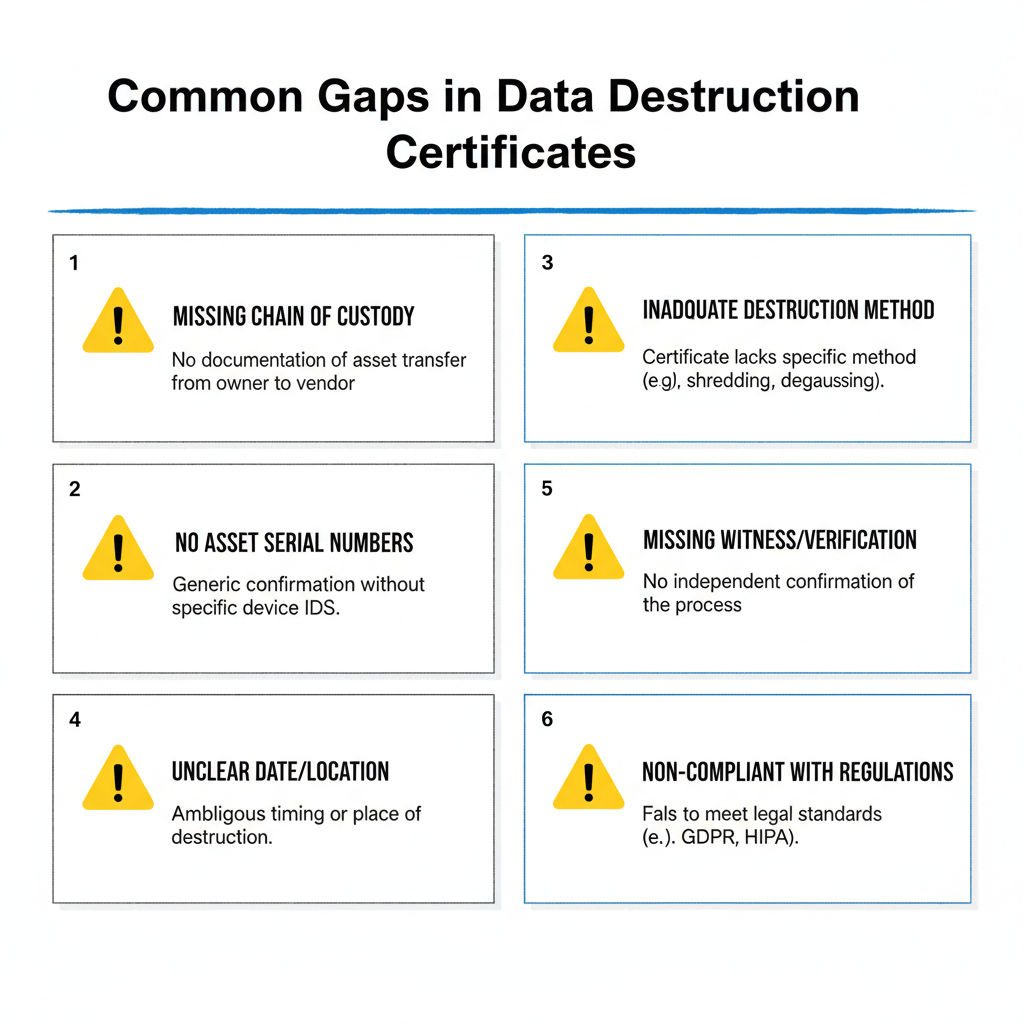
Even when organizations obtain certificates after disposing of IT assets, many of these documents contain critical gaps that auditors quickly identify. Understanding these deficiencies is essential for maintaining compliance and protecting your organization from data security risks.
Missing Asset Serial Numbers
One of the most frequent gaps is the absence of specific device identifiers. A valid data destruction certificate must list the serial numbers, asset tags, or unique identifiers for each device destroyed. Without this detail, there's no way to verify that your specific equipment was actually processed. Generic certificates that simply state "hard drives destroyed" provide no audit trail and leave your organization exposed.
Lack of Destruction Method Details
Certificates often fail to specify the exact destruction method used. Vague language like "secure disposal" or "data wiping" doesn't meet regulatory standards. The certificate should clearly state whether physical shredding, degaussing, cryptographic erasure, or another verified method was employed. This specificity is critical because different data types and compliance frameworks require different approaches.
Absence of Responsible Party Signatures
Many certificates lack proper authorization signatures from the personnel who performed or witnessed the destruction. A compliant certificate requires the signature of the technician or authorized representative who conducted the process, along with their credentials. This accountability measure ensures that a traceable individual stands behind the destruction claim.
Missing Date and Time Stamps
Precise documentation of when destruction occurred is frequently overlooked. Certificates should include not just the date but ideally the time range during which assets were processed. This temporal documentation is crucial for establishing chain of custody and demonstrating that destruction occurred within required timeframes after device retirement.
Incomplete Chain of Custody Documentation
The journey from your facility to the destruction site must be documented. Certificates that don't include pickup dates, transport details, and custody transfer points create gaps in accountability. Auditors want to see that assets were continuously tracked from the moment they left your control until final destruction.
Failure to Reference Compliance Standards
A significant gap occurs when certificates don't explicitly reference the standards they comply with. Whether it's NIST guidelines, industry-specific regulations, or certification frameworks, the certificate should state which standards governed the destruction process. This omission makes it difficult to demonstrate regulatory compliance during audits.
Lack of Verification or Witness Statements
Many certificates provide no independent verification that destruction actually occurred as claimed. Third-party witness statements, photographic evidence, or video documentation can strengthen a certificate's credibility. Without some form of verification beyond the service provider's self-certification, the document's value is significantly diminished.
The Reality of Inadequate Documentation
Improper data disposal remains one of the most common causes of data breaches, and inadequate certificates contribute directly to this risk. In 2026, the gap in secure data disposal represents one of the most underestimated security, compliance, and reputational risks faced by organizations. Regulators now expect provable data destruction, while ESG commitments are increasing scrutiny around responsible recycling practices.
These seven gaps represent the most frequent deficiencies that compliance officers and auditors encounter. Addressing them proactively ensures that your data destruction certificate provides genuine protection rather than false assurance.
Sources
- Data Destruction Guidelines & Standards 2026 | NIST, DoD, ISO ...
- Top IT Asset Disposal Methods for Secure Data Destruction
Consequences of Incomplete Certificates
An incomplete or invalid data destruction certificate creates a false sense of security that can have serious repercussions for your organization. When certificates lack critical elements—such as serial numbers, destruction methods, or proper signatures—they fail to provide the legal protection and audit trail your business needs. This gap leaves you vulnerable on multiple fronts, from regulatory compliance to cybersecurity.
Regulatory and Legal Exposure
Organizations operating under data protection regulations face significant penalties when they cannot prove proper data disposal. An incomplete certificate won't satisfy auditors or regulators who require documented evidence of secure data destruction. Without verifiable proof that sensitive information was destroyed according to recognized standards, your organization may be found non-compliant during audits, triggering fines and legal action.
The consequences extend beyond initial penalties. Regulatory bodies may impose ongoing monitoring requirements, increased reporting obligations, or restrictions on data handling practices. These measures can strain resources and damage your organization's reputation within your industry.
Financial Impact of Data Breaches
Improper data disposal is one of the most common causes of data breaches. When certificates fail to document thorough destruction processes, residual data on disposed devices becomes a liability. If that data falls into the wrong hands, the financial consequences can be severe.
Recent industry analysis shows that the average global breach cost rose to $4.88 million, according to findings from breach cost research. These costs include incident response, legal fees, regulatory fines, customer notification, credit monitoring services, and lost business due to reputational damage. For many organizations, a single breach stemming from improper asset disposal can threaten financial stability.
Reputational Damage and Customer Trust
Beyond immediate financial losses, incomplete certificates signal weak data governance practices. When customers, partners, or stakeholders learn that your organization cannot properly document data destruction, trust erodes quickly. In competitive markets, this reputational damage can be more costly than regulatory fines.
Businesses that experience breaches due to inadequate disposal practices often face public scrutiny, negative media coverage, and customer churn. Rebuilding trust requires significant investment in communication, enhanced security measures, and transparent reporting—all while competitors gain market share.
Operational and Insurance Complications
Insurance providers increasingly scrutinize data destruction practices when underwriting cyber liability policies. Incomplete certificates may result in higher premiums, coverage exclusions, or claim denials following a breach. If you cannot demonstrate that you followed documented destruction procedures with valid certificates, insurers may argue that negligence contributed to the incident.
Operationally, the discovery of certificate gaps during an audit can trigger emergency remediation efforts. These unplanned initiatives divert resources from strategic projects, require vendor re-engagement, and create internal disruption as teams scramble to reconstruct documentation or re-process assets that should have been properly handled initially.
Sources
- Data Destruction Guidelines & Standards 2026 | NIST, DoD, ISO ...
- The State of IT Asset Disposition in 2026: Security, Sustainability ...
Best Practices for Obtaining Certificates
Securing a valid data destruction certificate requires more than simply selecting a vendor and receiving paperwork. Organizations must take a proactive approach to ensure the certificates they obtain meet compliance standards and provide meaningful proof of secure data sanitization.
Align Data Destruction with Cybersecurity Standards
Best practice programs treat data destruction as an extension of cybersecurity rather than a standalone process. This means aligning your disposal methods with recognized guidance and ensuring your vendor follows established frameworks. Organizations in highly regulated industries should evaluate data sensitivity and applicable regulations when selecting a disposal method, as formal documentation requirements vary significantly by sector.
Verify Vendor Certifications and Frameworks
Before engaging a service provider, confirm they hold relevant certifications and follow industry frameworks that emphasize data protection, reuse quality, and environmental health and safety. Request evidence of their compliance with these standards and ask how their processes translate into the certificates they issue. A reputable vendor will be transparent about their methodology and willing to walk you through their documentation practices.
Establish Clear Certificate Requirements Upfront
Define your certificate requirements before the destruction process begins. Specify that you need detailed asset serial numbers, destruction methods, dates, technician signatures, and any other elements required by your compliance framework. Put these requirements in writing as part of your service agreement to ensure there's no ambiguity about deliverables.
Conduct Pre-Audit Reviews
Don't wait for an external audit to discover certificate gaps. Implement an internal review process where compliance or IT security personnel examine certificates immediately upon receipt. Check for completeness, verify that all required fields are populated, and confirm that destruction methods align with your data classification policies. Address any deficiencies with your vendor promptly.
Maintain a Centralized Certificate Repository
Store all certificates in a secure, centralized system with version control and access logging. This repository should allow you to quickly retrieve certificates by date range, asset type, or vendor. Proper organization ensures you can demonstrate compliance during audits and makes it easier to identify patterns if certificate quality issues arise with specific vendors.
Build Long-Term Vendor Relationships
Consistent quality often comes from established relationships with vendors who understand your specific requirements. Rather than switching providers frequently based solely on price, invest in partnerships with vendors who demonstrate reliability, transparency, and a willingness to adapt their documentation to meet your evolving compliance needs.
Sources
- The State of IT Asset Disposition in 2026: Security, Sustainability ...
- Top IT Asset Disposal Methods for Secure Data Destruction
Conclusion
A data destruction certificate is more than just a formality—it's a critical piece of documentation that demonstrates your organization's commitment to data security and regulatory compliance. As we've explored throughout this article, understanding the essential elements of a valid certificate, recognizing common gaps, and implementing best practices can mean the difference between genuine protection and a false sense of security.
The consequences of incomplete or inadequate certificates extend beyond compliance failures. They expose your organization to data breach risks, legal liabilities, and reputational damage that can take years to repair. By ensuring your certificates include all required elements—from detailed asset inventories and destruction methods to proper certifications and chain-of-custody documentation—you create a defensible audit trail that protects your organization.
Remember that having a certificate isn't enough; understanding its components is what truly safeguards your data security efforts. As I've learned through reviewing countless certificates against industry standards, the details matter. Every missing serial number, every vague destruction method description, and every absent signature represents a potential vulnerability.
Take the time to verify that your data destruction partners follow recognized standards and provide comprehensive documentation. Your due diligence today will protect your organization's data, reputation, and bottom line tomorrow. The investment in proper data destruction certification is not just about compliance—it's about building trust with your customers and stakeholders while ensuring that sensitive information remains permanently unrecoverable.