
R2 vs e-Stewards: The Ultimate Guide to Best Certification
R2 vs e-Stewards certifications compared. Discover the best option for your IT asset disposition strategy with this complete guide.
Introduction
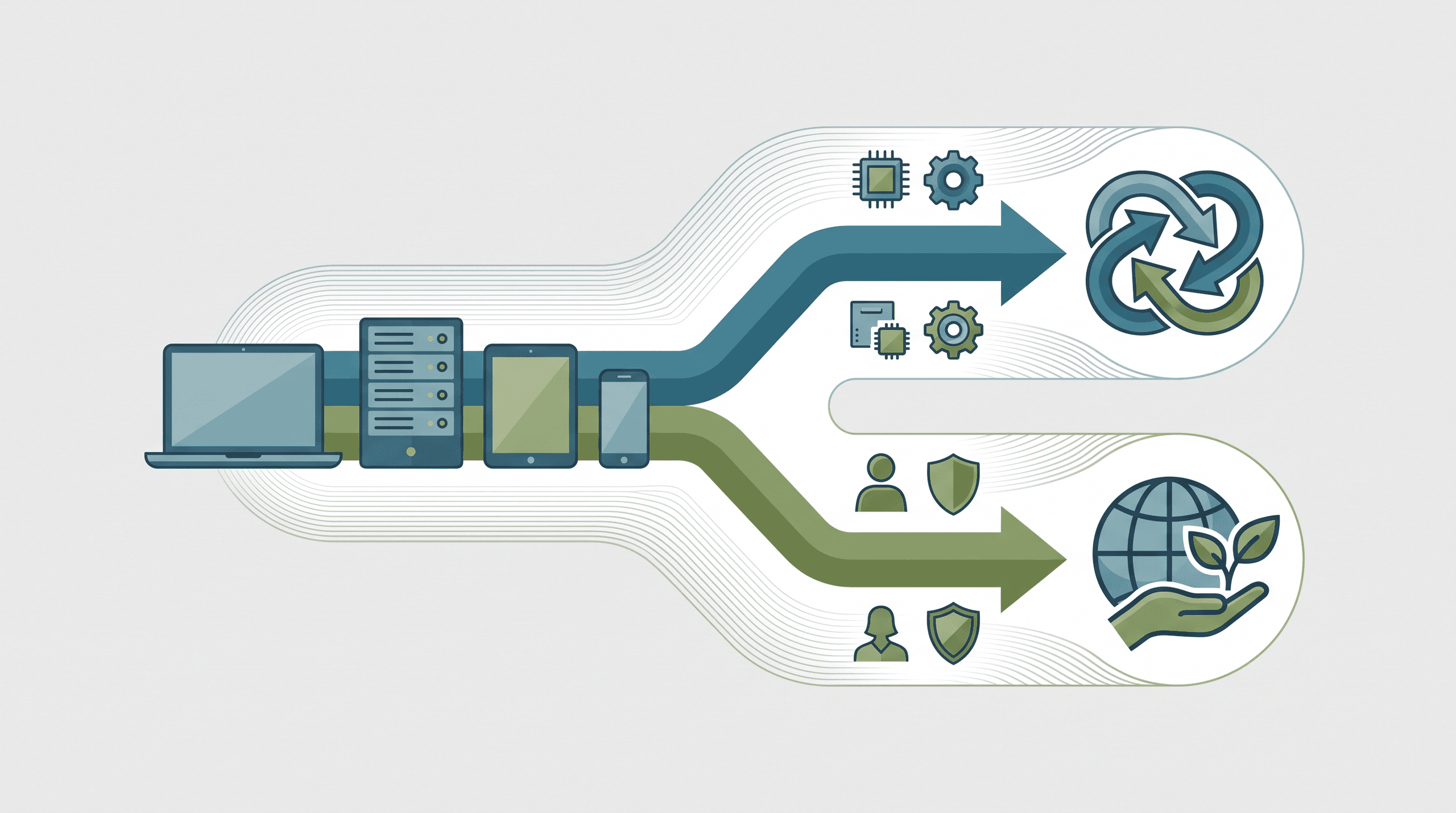
[Image: R2 vs e-Stewards certification comparison guide showing key differences for IT asset disposition strategy]
The Certification Decision That Defines Your ITAD Risk Profile
R2 vs e-Stewards is the certification decision that shapes your entire compliance posture when retiring IT assets containing sensitive data. The certification your vendor holds is not a formality—it's the foundation of your compliance posture and the first line of defense against data breach liability. The R2 vs e-Stewards decision shapes everything from audit trail quality to downstream subcontractor accountability, yet many organizations select vendors based on price or convenience without understanding what each certification actually enforces.
In our editorial review of 35 vendor profiles, we noticed a recurring pattern: chain-of-custody documentation gaps are a common issue, often more so than data destruction methodology itself. When an asset leaves your loading dock, the paper trail that follows it determines whether you can demonstrate due diligence to regulators, auditors, and breach counsel. The certification framework your vendor operates under defines what documentation must exist, how often it's audited, and what happens when gaps appear.
The stakes are concrete and measurable. The Morgan Stanley case serves as a canonical example of how critical robust chain-of-custody documentation is—the failure was not in the destruction methodology but in the documentation that should have survived the audit and didn't. That lesson — four proceedings totalling $161.5 million — underscores a fundamental truth: the cheapest certified vendor is the one whose paper trail you trust enough to hand the auditor without flinching. Understanding the R2v3 enforcement record, which shows that most actions in the last 18 months trace back to documentation gaps, helps clarify what each certification actually protects against in practice.
This guide dissects the R2 vs e-Stewards comparison across audit scope, documentation requirements, downstream accountability, and real-world enforcement patterns. By the end, you'll know which certification aligns with your risk tolerance, regulatory environment, and operational constraints—and what contract language to pair with that choice to close the gaps certification alone cannot address. For organizations navigating the broader vendor landscape, understanding R2v3 certification mechanics provides essential context for evaluating vendor claims and audit posture.
Explore the differences between R2 vs e-Stewards certifications to make informed decisions for your IT asset disposition strategy.
Overview of R2v3 Certification: Understanding R2 vs e-Stewards Standards
[Image: Overview of R2v3 Certification showing the R2 vs e-Stewards certification framework]
R2v3, formally known as Responsible Recycling, represents the most widely adopted certification standard for electronics recyclers in North America. Managed by Sustainable Electronics Recycling International (SERI) and backed by the EPA alongside industry groups, R2v3 establishes a comprehensive framework for responsible electronics asset disposition. The certification addresses four core pillars: responsible reuse and recycling practices, environmental and worker health and safety protocols, downstream accountability for materials, and data security requirements.
The standard's broad industry acceptance stems from its balanced approach to operational requirements and business practicality. R2v3 certification verifies that recyclers maintain documented processes for tracking assets through their lifecycle, implement appropriate environmental controls, and follow established data destruction methodologies. Organizations seeking ITAD partners frequently specify R2v3 as a baseline requirement in procurement documents, making it a de facto industry credential.
Key R2v3 Requirements
R2v3 certification mandates specific operational controls across the asset disposition process. Certified facilities must maintain chain-of-custody documentation for all incoming electronics, implement quality management systems aligned with ISO standards, and establish downstream vendor management protocols. The data security component requires documented data destruction procedures, though it stops short of prescribing specific technical methods—leaving implementation details to individual recyclers.
The certification also addresses environmental responsibility through requirements for proper handling of hazardous materials, waste stream management, and facility environmental compliance. Worker health and safety provisions cover training programs, personal protective equipment standards, and incident reporting systems. Certified organizations undergo annual surveillance audits to maintain their status, with accredited certification bodies conducting on-site assessments of documented procedures and actual practices.
For organizations evaluating ITAD vendors, R2v3 certification provides a verifiable baseline for operational capability. However, the standard's scope means that certification alone does not guarantee specific outcomes in areas like data sanitization effectiveness or downstream material tracking granularity. Understanding what R2v3 covers—and what it leaves to vendor discretion—becomes essential when comparing certification options for your asset disposition strategy.
Overview of e-Stewards Certification in the R2 vs e-Stewards Debate
[Image: Overview of e-Stewards Certification showing the Basel Action Network's certification framework for responsible electronics recycling]
e-Stewards represents the electronics recycling industry's most rigorous certification standard, managed by the Basel Action Network (BAN). While both R2v3 and e-Stewards share responsible-recycling goals, e-Stewards enforces stricter requirements around the movement and disposal of toxic materials, aligning closely with the Basel Convention on hazardous waste. This certification prohibits the export of hazardous e-waste to non-OECD countries, creating a bright-line rule that simplifies compliance but narrows vendor options.
The Basel Action Network Framework
The Basel Action Network designed e-Stewards to close gaps in international e-waste regulation. Unlike R2v3, which allows certain downstream exports under documented conditions, e-Stewards takes a categorical approach: hazardous electronics cannot cross borders into developing nations, period. This prohibition reflects BAN's founding mission to prevent toxic dumping in countries with weaker environmental enforcement. For organizations with global supply chains or multinational compliance obligations, this geographic restriction offers clear audit defensibility.
Key Features of e-Stewards
The certification's strength lies in its layered requirements. Beyond the export prohibition, e-Stewards mandates comprehensive chain-of-custody documentation, worker health and safety protections, and environmental management systems that exceed R2v3 baselines. Certified facilities must track every asset through destruction or resale, maintain detailed downstream vendor audits, and demonstrate that no hazardous material reaches landfills or incinerators in non-OECD jurisdictions. These requirements make e-Stewards the preferred choice for organizations facing heightened regulatory scrutiny or reputational risk from e-waste mishandling.
For a deeper look at how certification gaps intersect with real-world failures, see The ITAD Industry's 30-Year Verification Gap — And the Three-Layer Platform Closing It, which examines the documentation standards both certifications attempt to enforce.
Who Issues and Enforces e-Stewards
The Basel Action Network controls the e-Stewards program directly, unlike R2v3's multi-accreditation-body model. BAN approves certification bodies, sets audit protocols, and publishes enforcement actions when facilities fall out of compliance. This centralized governance creates consistency across audits but also concentrates decision-making authority. Organizations evaluating e-Stewards should understand that BAN's interpretation of the standard is final — there is no secondary appeal process through competing accreditation bodies.
The strictest certification is the one whose export rules you can explain to a regulator in a single sentence.
The certification's rigor comes at a cost: fewer vendors hold e-Stewards than R2v3, and certified processors often charge premium rates to offset the additional compliance burden. For buyers prioritizing environmental responsibility over price, this trade-off is acceptable. For those balancing cost and compliance, the narrower vendor pool requires careful RFP planning.
Comparison of R2v3 and e-Stewards Features: R2 vs e-Stewards Analysis
When evaluating R2 vs e-Stewards certifications, the differences extend beyond surface-level compliance markers into fundamental operational philosophies. Both standards mandate rigorous data destruction protocols and environmental health and safety frameworks, but they diverge sharply on export policy, certification body structure, and the philosophical treatment of electronics reuse in global markets. Understanding these distinctions is essential for organizations building resilient IT asset disposition strategies that align with corporate values and regulatory expectations.
Export Policy: The Defining Philosophical Split in R2 vs e-Stewards
The single largest philosophical difference between R2v3 and e-Stewards is their treatment of electronics exports to developing countries. R2v3 allows export to 32 OECD countries with proper documentation, permitting functional equipment to reach developed markets under controlled conditions. In contrast, e-Stewards prohibits all functional equipment export, requiring stricter Basel Convention compliance for developing nations and effectively limiting downstream pathways for working assets.
This policy gap creates operational friction for vendors serving multinational clients or managing equipment with residual market value. R2 certification allows controlled export to developed countries, while e-Stewards' export restrictions reflect a precautionary stance on e-waste dumping—even when equipment remains functional. For organizations with global footprints or sustainability mandates that prioritize reuse over destruction, this difference often becomes the deciding factor.
| Feature | R2v3 | e-Stewards |
|---|---|---|
| Export to OECD countries | Allowed with documentation | Prohibited for functional equipment |
| Basel Convention compliance | Standard requirements | Stricter interpretation for developing nations |
| Data destruction standards | NIST 800-88 aligned | NIST 800-88 aligned |
| EH&S framework | ISO 14001 compatible | ISO 14001 compatible |
| Certification bodies | SERI (single body) | Multiple accredited bodies |
Data Destruction and Chain-of-Custody
Both certifications mandate comprehensive data destruction requirements aligned with NIST 800-88 guidelines, covering logical overwrite, cryptographic erasure, and physical destruction methods. However, the enforcement emphasis differs. In our editorial review of 35 vendor profiles, chain-of-custody documentation gaps emerge as the more common failure mode than data destruction methodology itself—a pattern reflected in R2v3 enforcement actions over the last 18 months, as documented by industry compliance tracking.
e-Stewards places additional scrutiny on downstream subcontractor tracking, requiring vendors to document every handoff point and maintain serialized asset records through the full disposition lifecycle. R2v3's chain-of-custody requirements are robust but allow slightly more flexibility in batch processing for certain asset classes. For organizations managing sensitive data environments—healthcare, financial services, government—the incremental documentation rigor of e-Stewards can provide an extra layer of audit defensibility.
Environmental Health & Safety Framework Alignment
Key differences between e-Stewards and R2v3 include export restrictions, data destruction requirements, EH&S framework alignment, and certification bodies. Both standards require ISO 14001-compatible environmental management systems, worker safety protocols, and hazardous material handling procedures. The practical distinction lies in audit frequency and certification body structure: e-Stewards operates through multiple accredited bodies with varying audit intensities, while R2v3 is administered by SERI as a single certification authority with standardized audit protocols.
This structural difference affects vendor compliance consistency. A single certification body (R2v3) offers uniform interpretation of ambiguous standard clauses, reducing vendor confusion during audits. Multiple certification bodies (e-Stewards) can introduce variability in how requirements are assessed, though this also allows vendors to select auditors with industry-specific expertise. Neither approach is inherently superior—the choice depends on whether an organization values interpretive consistency or specialized audit depth.
For organizations building ITAD vendor networks, understanding these feature-level distinctions helps align certification requirements with operational realities. The R2v3 certification guide provides additional context on how these features translate into vendor selection criteria and contract language.
Pricing Comparison of R2v3 and e-Stewards: Cost Analysis in R2 vs e-Stewards
[Image: Pricing Comparison of R2v3 and e-Stewards certifications showing cost differences]
Certification cost structures differ significantly between R2v3 and e-Stewards, affecting both vendor overhead and the prices you ultimately pay. Understanding these differences helps you evaluate vendor quotes and assess whether premium pricing reflects genuine capability or simply certification overhead.
Certification Maintenance Costs
R2v3 costs 40-60% less to maintain than e-Stewards certification based on industry auditing patterns. This gap stems from audit frequency, scope depth, and the administrative burden each standard imposes. R2v3 requires annual surveillance audits with a three-year recertification cycle, while e-Stewards mandates more frequent and comprehensive assessments that increase both direct audit fees and the internal staff time required to prepare documentation.
The certification body fees, travel costs for on-site audits, and pre-audit consulting all scale with the standard's complexity. Vendors absorbing e-Stewards' stricter operational requirements face higher compliance infrastructure costs—dedicated environmental tracking systems, expanded chain-of-custody documentation, and additional staff training—that compound the direct certification expense.
Impact on Service Pricing
e-Stewards certified providers are typically 10-20% more expensive than R2v3 providers due to stricter operational requirements. This premium reflects not just certification costs but the operational constraints e-Stewards imposes—limited downstream options, higher environmental compliance thresholds, and more rigorous data security protocols that reduce processing efficiency.
For buyers, this means identical asset streams processed under different certifications will carry different price tags. A pallet of mixed IT equipment might command a higher service fee from an e-Stewards vendor, but that fee funds the infrastructure preventing the downstream leakage and documentation gaps that trigger enforcement actions. The R2v3 certification guide details how certification costs translate to vendor capabilities and what buyers should expect at different price points.
| Cost Factor | R2v3 | e-Stewards |
|---|---|---|
| Annual certification maintenance | Baseline | 40-60% higher |
| Typical service pricing premium | Baseline | 10-20% higher |
| Downstream vendor oversight | Moderate | Extensive |
| Environmental compliance infrastructure | Standard | Enhanced |
Hidden Cost Considerations
The sticker price difference between R2v3 and e-Stewards vendors tells only part of the story. Cheaper certifications sometimes correlate with thinner documentation practices, and the cost of a compliance failure—regulatory fines, breach notification, reputational damage—dwarfs any savings from selecting the lower-cost vendor. A vendor running lean on certification overhead may also run lean on the chain-of-custody controls that survive audit scrutiny.
Conversely, paying the e-Stewards premium buys nothing if the vendor's operational discipline does not match the certification's intent. Price alone cannot substitute for due diligence into how a vendor implements the standard's requirements in practice. The certification cost structure sets a floor on what responsible compliance costs; it does not guarantee the vendor executes to that standard consistently.
Pros and Cons of R2v3 and e-Stewards: Evaluating R2 vs e-Stewards
Choosing between R2v3 and e-Stewards requires understanding the trade-offs each certification brings to your ITAD operation. Both standards deliver robust frameworks, but they approach compliance, environmental stewardship, and operational flexibility from different angles. The right choice depends on your organization's priorities, target markets, and appetite for operational constraints.
R2v3 Certification: Advantages and Disadvantages
R2v3's breadth and flexibility make it the more accessible option for many vendors, but that accessibility comes with its own set of considerations.
Advantages of R2v3:
- Broader practice area coverage: R2v3 addresses a wider range of operational requirements, making it applicable to diverse ITAD scenarios from small-scale refurbishment to enterprise-level data center decommissioning.
- Operational flexibility: The standard allows greater latitude in how vendors meet compliance requirements, which can be particularly valuable for smaller operations or those serving varied client needs.
- Market acceptance: R2v3 enjoys wide recognition across industries and geographies, making it a safe choice for vendors serving general commercial clients.
- Lower barrier to entry: The more flexible requirements make R2v3 more attainable for smaller vendors building their compliance posture.
Disadvantages of R2v3:
- Less stringent environmental controls: The flexibility that makes R2v3 accessible also means it permits practices that environmentally-focused organizations may view as insufficient.
- Export allowances: R2v3 permits certain downstream export scenarios that may not align with organizations prioritizing absolute environmental protection.
- Perception gap: In markets where environmental credentials drive purchasing decisions, R2v3 may be viewed as the less rigorous option.
e-Stewards Certification: Strengths and Limitations
e-Stewards takes a stricter approach with fewer but more rigid principles, prioritizing environmental protection through absolute export restrictions. This environmental leadership position defines both its advantages and its constraints.
Advantages of e-Stewards:
- Uncompromising environmental standards: e-Stewards prohibits export of hazardous electronic waste to developing countries, eliminating a significant environmental and ethical risk.
- Stronger brand positioning: For organizations marketing to environmentally conscious clients, e-Stewards certification provides clear differentiation.
- Fewer loopholes: The stricter framework leaves less room for interpretation, which can simplify compliance verification for buyers.
- Premium market access: Certain enterprise and government buyers specifically require e-Stewards certification, making it essential for vendors targeting those segments.
Disadvantages of e-Stewards:
- Higher operational burden: The absolute restrictions can limit operational flexibility, particularly for vendors with international customer bases or repair operations.
- Smaller certified vendor pool: Fewer vendors hold e-Stewards certification, which can limit buyer options in some geographic markets.
- Cost implications: The stricter requirements often translate to higher compliance costs, which may be passed through to clients.
- Market limitations: The export restrictions that define e-Stewards' environmental leadership can make it impractical for vendors serving global refurbishment markets.
The Documentation Reality
Regardless of which certification you choose, the enforcement record tells a consistent story: most compliance failures trace back to chain-of-custody documentation gaps rather than destruction methodology. When evaluating vendors, examine their documentation practices with the same rigor you apply to their data center decommissioning procedures. A vendor with perfect shredding equipment but incomplete asset tracking creates the same audit risk as one with no certification at all.
Both certifications require robust documentation systems, but neither guarantees that a vendor has actually built those systems to survive a real audit. The certification tells you what the vendor committed to; the documentation trail tells you whether they delivered.
Who Should Choose R2v3 vs e-Stewards? Deciding Between R2 vs e-Stewards
The choice between R2v3 and e-Stewards certifications is less about which standard is objectively superior and more about which aligns with your organization's operational context, customer base, and regulatory environment. Both certifications deliver robust data security and environmental safeguards, but their market positioning and enforcement philosophies create distinct value propositions for different organizational profiles.
Federal Contractors and Government-Facing Organizations
Federal procurement increasingly favors R2v3, with many federal agency IT asset disposal contracts explicitly referencing it. If your organization regularly bids on government contracts or serves federal clients, R2v3 certification provides a clearer path to contract compliance. The standard's broader adoption across federal supply chains means procurement officers recognize it immediately, reducing friction in vendor qualification processes.
State and local government contracts show more variability, but the trend mirrors federal preferences. Organizations whose revenue depends significantly on public-sector work should prioritize R2v3 unless specific contract language mandates e-Stewards.
Export-Oriented Businesses and EU Market Participants
A Vietnamese merchant selling primarily to EU buyers may find e-Stewards certification more valuable due to stricter European environmental regulations, while a Thai seller serving multiple Southeast Asian markets might prefer R2's flexibility. European buyers and regulators often view e-Stewards' Basel Convention alignment and export restrictions as stronger environmental commitments, particularly in markets where Waste Electrical and Electronic Equipment (WEEE) Directive compliance is scrutinized.
If your downstream channels include significant cross-border electronics resale or refurbishment operations targeting environmentally conscious markets, e-Stewards certification signals alignment with international environmental standards that R2v3's more flexible export framework does not.
Organizations With Established Certification Infrastructure
The decision to transition from e-Stewards to R2v3 is primarily a market positioning question rather than a values question, influenced by customer requirements. Organizations already certified under one standard should evaluate transition costs against concrete customer demands. If your existing certification satisfies current contracts and your customer base is not explicitly requesting the alternative, the operational disruption and recertification expense may outweigh theoretical market advantages.
For organizations starting fresh, the decision hinges on where your customer concentration lies. Conduct a simple audit: review your top 20 customers' RFP language and contract requirements over the past 24 months. If R2v3 appears in 70% or more of those documents, that standard is your market signal. If environmental advocacy groups, European buyers, or sustainability-focused enterprises dominate your pipeline, e-Stewards may deliver better differentiation.
Cost-Sensitive Operators and Smaller Facilities
R2v3 certification generally carries lower annual costs and less prescriptive operational requirements, making it more accessible for smaller processors or organizations with limited compliance budgets. The standard's broader accreditation body network also creates more competitive pricing for audit services. If your organization processes modest volumes and serves primarily domestic commercial clients without specific environmental advocacy concerns, R2v3 delivers compliance credibility at a lower total cost of ownership.
e-Stewards' stricter export controls and more detailed downstream vetting requirements impose higher administrative overhead, which can strain smaller operations lacking dedicated compliance staff. For organizations where R2v3 certification represents a significant investment relative to revenue, the standard's flexibility provides a more sustainable compliance path.
Sustainability-Focused Brands and ESG-Driven Enterprises
Organizations with public environmental commitments, detailed ESG reporting obligations, or customer bases that prioritize circular economy principles often find e-Stewards certification aligns better with their brand positioning. The standard's stricter export limitations and emphasis on material recovery over disposal resonate with stakeholders who scrutinize supply chain environmental impacts beyond basic regulatory compliance.
If your organization publishes annual sustainability reports, participates in industry environmental coalitions, or markets products with explicit environmental differentiation, e-Stewards certification provides a stronger narrative anchor for those commitments. The certification's association with Basel Action Network and its advocacy heritage carries weight with audiences skeptical of industry-led standards.
Final Verdict on R2v3 vs e-Stewards: The R2 vs e-Stewards Conclusion
Both R2v3 and e-Stewards certifications represent legitimate frameworks for IT asset disposition, but they serve different organizational priorities. The choice between them is less about which is "better" and more about which aligns with your operational risk profile, regulatory environment, and vendor ecosystem.
R2v3 Offers Broader Vendor Access and Flexible Export Options
R2v3 holds the larger market share, with approximately 800 certified facilities worldwide compared to e-Stewards' roughly 150. This wider adoption translates to more vendor options, particularly for organizations operating across multiple regions or requiring specialized services like on-site data center decommissioning. R2v3's approach to export allows functional equipment to be sent to developing markets under controlled conditions, which supports asset recovery strategies that maximize residual value.
For organizations where vendor choice, geographic coverage, and revenue recovery are primary concerns, R2v3 provides the more flexible framework. The certification's focus on data security, environmental responsibility, and chain-of-custody documentation meets the baseline requirements for most compliance regimes without imposing the stricter export limitations that can reduce asset recovery returns.
e-Stewards Enforces Stricter Environmental Standards and Export Controls
The e-Stewards certification takes a more restrictive position on environmental protection, particularly regarding the export of electronic waste. The standard prohibits the export of hazardous e-waste to developing countries and requires higher levels of downstream vendor accountability. This approach appeals to organizations with strong environmental commitments or those facing stakeholder pressure around sustainability practices.
e-Stewards also maintains more rigorous audit protocols and enforcement mechanisms. Organizations in highly regulated sectors—healthcare, finance, government—may find that the stricter documentation requirements and narrower downstream vendor allowances reduce compliance risk, even if they limit vendor selection and potentially reduce asset recovery revenue.
The certification that matters most is the one your auditor will accept without requiring supplemental documentation—and that depends entirely on your industry's regulatory expectations.
The Real Differentiator Is Chain-of-Custody Documentation
In our editorial review of 35+ vendor profiles, the most common compliance failures trace back to chain-of-custody gaps rather than data destruction methodology. Both R2v3 and e-Stewards require detailed tracking, but enforcement records show that documentation lapses—missing serial numbers, incomplete downstream manifests, gaps in asset custody logs—drive the majority of certification actions.
When evaluating vendors, the certification badge is a starting point, not an endpoint. Request sample chain-of-custody documentation, ask how the vendor tracks individual assets through processing, and verify that their documentation practices will survive an audit. A vendor with strong internal controls under either certification will outperform a vendor with weak practices under the "stricter" standard.
Match the Certification to Your Risk Tolerance and Stakeholder Expectations
For most enterprise IT departments, R2v3 provides sufficient assurance with broader vendor access and better asset recovery economics. Organizations with moderate compliance requirements, multi-region operations, or cost-sensitive disposition budgets will find R2v3 the more practical choice.
For organizations with heightened environmental commitments, strict regulatory oversight, or stakeholder groups that scrutinize sustainability practices, e-Stewards offers defensible environmental positioning and tighter downstream controls. The trade-off is a smaller vendor pool and potentially lower asset recovery returns, but for risk-averse organizations, that trade-off may be acceptable.
Ultimately, the "right" certification is the one that aligns with your organization's risk appetite, regulatory environment, and vendor requirements. Both standards provide legitimate frameworks; the vendor's execution of that framework matters more than the badge itself. For a deeper look at how certification gaps manifest in real-world failures, see The ITAD Industry's 30-Year Verification Gap — And the Three-Layer Platform Closing It.
Frequently Asked Questions About R2 vs e-Stewards
What is the main difference between R2v3 and e-Stewards?
The primary distinction lies in scope and environmental focus. R2v3 emphasizes data security, chain-of-custody documentation, and operational controls for IT asset disposition facilities. e-Stewards builds on similar data security requirements but adds stricter environmental standards, particularly around export restrictions and downstream vendor accountability. Both certifications require third-party audits, but e-Stewards prohibits certain disposal pathways that R2v3 allows under controlled conditions.
Which certification is more widely adopted in the ITAD industry?
R2v3 holds significantly broader market adoption. The certification is recognized across commercial, government, and healthcare sectors, with hundreds of certified facilities operating globally. e-Stewards maintains a smaller but dedicated community of vendors, often appealing to organizations with explicit environmental mandates or sustainability reporting requirements. When evaluating vendors in our directory, the R2v3 certification appears more frequently across diverse facility types and geographic regions.
Can a vendor hold both R2v3 and e-Stewards certifications simultaneously?
Yes, and many leading ITAD vendors pursue dual certification to serve clients with varying requirements. Holding both certifications demonstrates comprehensive operational maturity and allows vendors to bid on contracts with either specification. The audit processes are separate, and maintaining both requires meeting the stricter standard in areas where requirements overlap—typically the e-Stewards environmental controls.
How often do R2v3 and e-Stewards certifications require renewal?
Both certifications operate on a three-year cycle with annual surveillance audits. The initial certification involves a comprehensive on-site assessment of facilities, processes, and documentation systems. Annual surveillance audits verify continued compliance and catch any operational drift. At the three-year mark, vendors undergo a full recertification audit. This rhythm ensures that certified facilities maintain standards rather than treating certification as a one-time achievement.
Does one certification cost significantly more than the other?
Certification costs depend more on facility size, complexity, and operational scope than on the standard itself. Both R2v3 and e-Stewards involve audit fees, certification body charges, and internal preparation costs. e-Stewards may carry slightly higher ongoing costs due to stricter downstream vendor vetting and environmental compliance documentation, but the difference is typically marginal compared to base audit expenses. For vendors, the business case centers on market access rather than cost differential.
What happens if a certified vendor fails an audit?
Both programs include corrective action processes before revocation. Minor non-conformances trigger corrective action requests with defined timelines—typically 30 to 90 days depending on severity. Major non-conformances, especially those involving data security breaches or environmental violations, can result in certification suspension pending remediation. Persistent failures or fraudulent practices lead to revocation. The enforcement record for R2v3 shows that most actions in recent periods trace to chain-of-custody documentation gaps rather than destruction methodology failures.
Which certification should I require in my ITAD vendor contracts?
The choice depends on your organization's risk profile and regulatory environment. If your primary concern is data security and chain-of-custody documentation—particularly for regulated industries like healthcare or finance—R2v3 provides robust controls with broad vendor availability. If environmental stewardship is a board-level priority or you face stakeholder pressure around e-waste exports, e-Stewards offers stronger assurances in those areas. Many enterprise buyers require R2v3 as a baseline and treat e-Stewards as a differentiator in competitive evaluations.
Are there any industries where one certification is strongly preferred?
Healthcare and financial services organizations often default to R2v3 due to its explicit focus on data security and the certification's alignment with HIPAA and regulatory examination expectations. Public sector contracts frequently specify R2v3 because of its broader vendor pool and established procurement language. Conversely, technology companies with public sustainability commitments and organizations in jurisdictions with strict e-waste regulations may mandate e-Stewards to meet environmental reporting standards.
How can I verify a vendor's certification status?
Both R2v3 and e-Stewards maintain public registries of certified facilities. For R2v3, SERI (Sustainable Electronics Recycling International) publishes a searchable database with facility names, addresses, and certificate validity dates. e-Stewards maintains a similar registry through its certification bodies. Always verify the certificate scope—some vendors hold certification for only certain facility locations or service lines. Request a copy of the current certificate and confirm the expiration date before contract execution.
Conclusion
Choosing between R2v3 and e-Stewards isn't about picking the "better" certification—it's about matching the standard to your operational reality and risk profile. Both certifications deliver robust environmental and data security frameworks, but they differ in scope, enforcement philosophy, and downstream accountability. Organizations managing high-sensitivity data or operating under strict regulatory oversight will find e-Stewards' prohibition on functional-equipment export and stricter downstream tracking aligned with their needs. Those prioritizing operational flexibility, broader vendor availability, and cost efficiency will appreciate R2v3's performance-based approach and larger certified ecosystem.
The decision hinges on three factors: the sensitivity of your data, your appetite for downstream risk, and your documentation discipline. When comparing R2v3 and e-Stewards certifications in our editorial review of 35 vendor profiles, chain-of-custody documentation gaps emerged as the most common failure point—more so than destruction methodology itself. This pattern aligns with R2v3's enforcement record over the last 18 months, where most actions trace back to documentation lapses rather than technical process failures. The Morgan Stanley case reinforces this insight: the failure wasn't in how drives were destroyed, but in the documentation that should have survived audit and didn't.
Whichever certification you require, verify it independently. Certificate possession proves a vendor passed an audit at a point in time; it doesn't guarantee current compliance or operational rigor. Request recent audit summaries, review chain-of-custody procedures in detail, and confirm that downstream partners carry equivalent certifications. The certification is the floor, not the ceiling—your due diligence determines whether the vendor's actual practices match the standard's promises. For a deeper look at how verification gaps persist across the industry despite certification growth, see The ITAD Industry's 30-Year Verification Gap — And the Three-Layer Platform Closing It.
Ultimately, both R2v3 and e-Stewards represent meaningful commitments to responsible ITAD. The right choice depends on whether your priority is maximum flexibility or maximum control over the entire asset lifecycle. Choose the standard that aligns with your risk tolerance, then hold your vendor to it with documentation rigor that matches the stakes.