
RIOS Certification: The Ultimate Guide to This Simple Standard
Learn about RIOS Certification, the integrated management standard for recycling and data destruction industries, and why it matters today.
Introduction
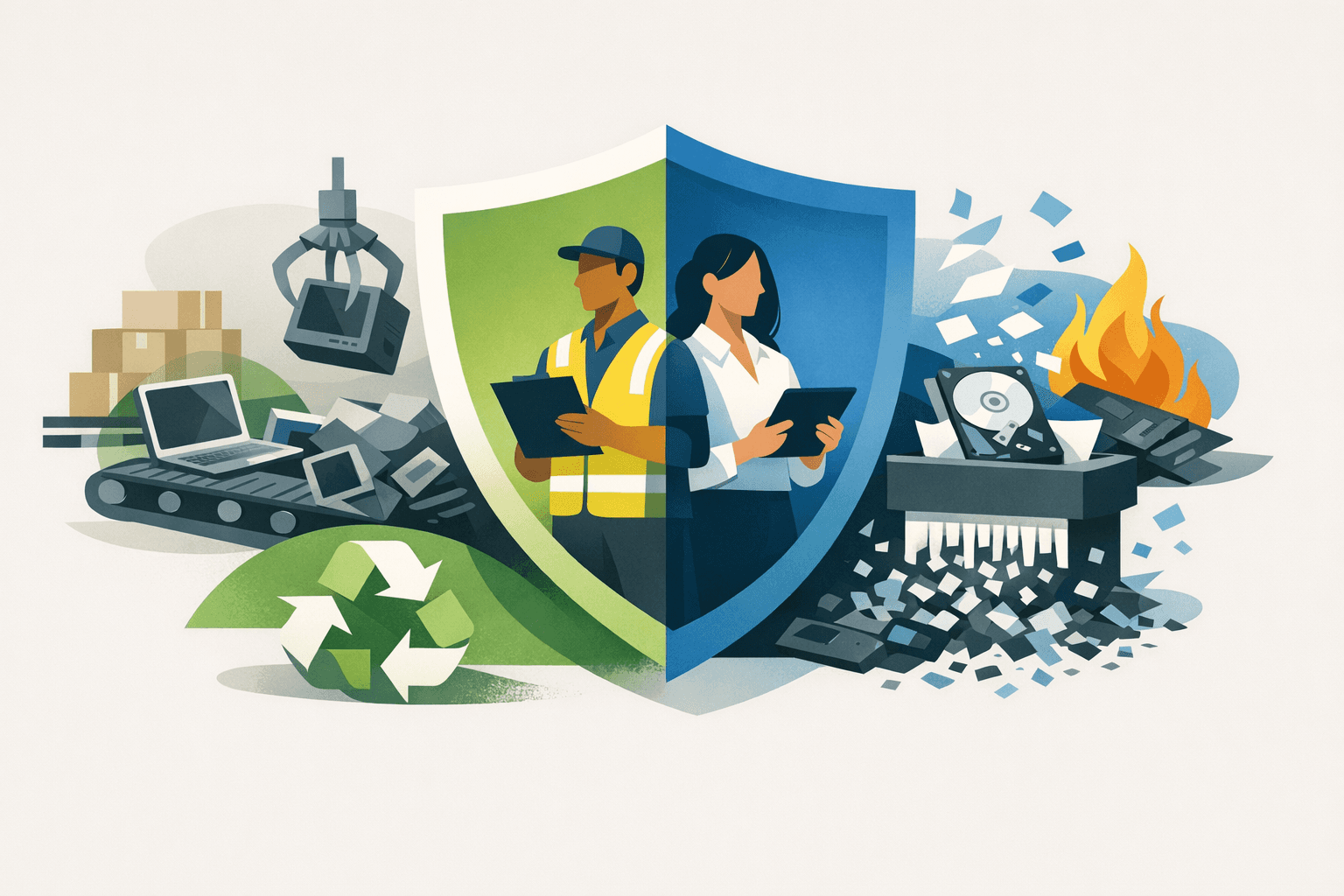
RIOS Certification represents an integrated management standard designed specifically for the recycling and IT asset disposition industries. Unlike fragmented compliance frameworks that address quality, environmental, and safety concerns separately, RIOS Certification consolidates these elements into a unified audit structure. For procurement professionals evaluating ITAD vendors, this integration matters because it creates a single point of verification for operational integrity across multiple risk domains.
The standard emerged in response to persistent documentation failures in the ITAD sector. In our editorial review of vendor profiles, we noticed a recurring pattern: the certificate of data destruction referenced in marketing materials often differed structurally from the certificate outlined in the vendor's published methodology. RIOS Certification directly addresses this gap by requiring that documented processes match operational reality, creating an auditable trail that survives regulatory scrutiny.
For organizations managing sensitive data retirement, RIOS Certification offers a practical filter. The certification process scrutinizes not only destruction methods but also the documentation infrastructure supporting those methods. This dual focus aligns with the lessons learned from high-profile failures, where the breakdown occurred not in the technical execution but in the chain-of-custody documentation that should have survived the audit. By establishing qualified auditing resources and a strong compliance infrastructure, RIOS Certification creates greater accessibility to integrated verification while maintaining the integrity and value of the standard.
The certification is not a guarantee of perfect execution, but it does signal that an organization has submitted its operational documentation to third-party review and aligned its internal processes with an industry-recognized framework. For procurement teams building vendor shortlists, RIOS Certification provides a baseline indicator that documented procedures exist and have been independently verified against a consistent standard.
Learn about RIOS Certification, its relevance in procurement, and why it matters for data destruction.
Understanding RIOS Certification
RIOS Certification represents an integrated management system designed specifically for the recycling industry. Unlike fragmented compliance frameworks that address quality, environmental, and safety concerns separately, RIOS consolidates these dimensions into a single standard. The acronym stands for Recycling Industry Operating Standard, and its primary function is to streamline operational oversight while reducing both workplace injuries and environmental impact.
The Three-Pillar Framework
RIOS Certification integrates three traditionally separate management domains into one cohesive structure. The quality management component ensures consistent operational procedures and output specifications. The environmental management layer addresses waste handling, emissions, and resource efficiency. The health and safety pillar focuses on worker protection and injury prevention. By unifying these elements, RIOS eliminates the redundancy and documentation overhead that operators face when maintaining multiple parallel certifications.
This integration matters in procurement contexts where vendors often present a portfolio of certifications without clarifying how those credentials interact. A vendor holding RIOS demonstrates that their quality controls, environmental practices, and safety protocols have been evaluated as an interconnected system rather than isolated checkboxes. The distinction becomes critical when assessing chain-of-custody documentation—the same records that support data destruction claims must also satisfy environmental compliance and workplace safety requirements.
Why the Recycling Industry Needed a Dedicated Standard
Generic management standards were not designed for the operational realities of recycling facilities. Material streams vary widely in composition and contamination risk. Processing equipment poses unique safety hazards. Downstream market volatility affects quality specifications. RIOS addresses these sector-specific challenges by embedding recycling industry best practices directly into the standard's requirements, rather than forcing operators to interpret generic clauses through a recycling lens.
For procurement professionals evaluating ITAD vendors, this specificity translates into more predictable outcomes. When a vendor claims RIOS Certification, you can infer a baseline understanding of material handling protocols, contamination controls, and worker safety measures that apply directly to electronic waste streams. This is the same operational rigor that should govern how a certificate of data destruction is generated, stored, and made available during audit—a connection that becomes obvious only when you understand RIOS as an integrated framework rather than another compliance badge.
The standard's adoption has grown steadily in facilities handling electronics, where the overlap between recycling operations and data security obligations is most pronounced. In our editorial review of vendor profiles, we noticed a recurring pattern: the certificate of data destruction referenced in marketing materials often differed structurally from the certificate outlined in the vendor's published methodology. RIOS Certification addresses this gap by requiring consistency between documented procedures and actual operational outputs, making it particularly relevant for operators seeking to establish a robust chain of custody. Understanding this framework is essential when evaluating whether a vendor's certification portfolio supports their data destruction claims or merely decorates them. For a deeper look at how documentation gaps undermine vendor credibility, see The ITAD Industry's 30-Year Verification Gap — And the Three-Layer Platform Closing It.
Importance of RIOS Certification in Procurement
For procurement professionals managing IT asset disposition contracts, RIOS Certification represents a critical baseline for vendor evaluation. The certification signals that a recycling or data destruction provider has implemented integrated management systems covering quality, environmental responsibility, health and safety, and security — all within a single audited framework. When evaluating vendors, this integration matters because fragmented certifications often create documentation gaps that surface only during compliance audits or incident investigations.
The value of RIOS Certification becomes clearer when viewed through the lens of operational consistency. Maintaining RIOS certification demonstrates a company's commitment to improving efficiency and delivering consistent service in the recycling industry. For procurement teams, this translates directly into predictable chain-of-custody documentation, standardized reporting formats, and reduced variance in service delivery across multiple engagements. The alternative — vendors with patchwork certifications or self-declared compliance — introduces risk that procurement professionals typically discover too late.
Why RIOS Certification Matters for Risk Mitigation
Procurement decisions in IT asset disposition carry downstream liability that extends well beyond the initial contract period. Having RIOS Certification helps organizations ensure that their retired IT assets are disposed of in an environmentally responsible manner. More importantly, the certification's integrated approach means that environmental compliance, data security protocols, and operational quality controls are audited as interconnected systems rather than isolated checkboxes. This matters when regulators or auditors trace asset disposition chains months or years after the fact.
The certification requirement also creates a useful filter during vendor selection. Vendors who maintain RIOS Certification have already absorbed the cost and operational discipline required to pass third-party audits across multiple domains. This pre-qualification reduces the procurement team's due diligence burden and provides a documented floor for vendor capability. Without this baseline, procurement professionals must independently verify each management system component — a process that few organizations have the resources to execute rigorously.
The cheapest vendor is the one whose documentation you trust enough to hand the auditor without hesitation.
Operational Advantages in Contract Management
From a contract management perspective, RIOS Certification simplifies performance monitoring and compliance verification. The standard requires certified vendors to maintain documented procedures for handling non-conformances, tracking corrective actions, and reporting incidents — all elements that map directly to typical ITAD contract terms. When a vendor holds RIOS Certification, procurement teams can reference the certification's audit requirements rather than negotiating custom compliance language from scratch.
This standardization also improves comparability across vendor proposals. When multiple bidders hold RIOS Certification, procurement professionals can focus evaluation criteria on service scope, pricing structure, and geographic coverage rather than spending time decoding proprietary quality frameworks. The certification provides a common language that reduces information asymmetry between buyers and vendors, particularly for procurement teams without deep technical expertise in recycling or data destruction operations.
For organizations managing multi-site or multi-vendor ITAD programs, the verification gap in vendor documentation becomes a recurring challenge. RIOS Certification addresses part of this gap by requiring integrated documentation systems that connect operational procedures to audit evidence. While no certification eliminates all risk, the integrated structure of RIOS reduces the likelihood that critical documentation will be missing when needed.
The RIOS Certification Process
The RIOS Certification process is structured around a phased approach that requires facilities to assess, implement, and validate their management systems before facing formal audit. Unlike one-time compliance checks, RIOS demands ongoing operational alignment across quality, environmental, and health-and-safety domains. The certification path is sequential: organizations must first understand their current state, then close gaps systematically, and finally demonstrate readiness through third-party evaluation.
For procurement professionals evaluating vendor claims, understanding this process clarifies what separates certified facilities from those merely "working toward" certification. The timeline and rigor involved make RIOS a meaningful signal when verifying vendor capability.
Assessing Current Operations
The first step involves a comprehensive internal review of existing processes against RIOS requirements. Facilities must document current practices in data handling, asset tracking, environmental controls, and worker safety protocols. This baseline assessment identifies gaps between current operations and the standard's expectations. Many organizations discover that informal practices—adequate for day-to-day work—lack the documentation structure RIOS auditors require.
This phase typically reveals whether a facility's chain-of-custody documentation can survive scrutiny. In our editorial review of vendor profiles, we noticed that the certificate of data destruction referenced in marketing materials often differed structurally from the certificate outlined in the vendor's published methodology—a gap that becomes visible during this assessment stage.
Planning and Implementation
Once gaps are identified, facilities develop an implementation plan to bring operations into compliance. This phase involves creating or revising standard operating procedures, establishing measurement systems, and training personnel on new protocols. The work is operational, not cosmetic: RIOS requires that documented procedures reflect actual practice, and auditors verify this through observation and sampling.
Implementation timelines vary based on facility size and starting maturity. Smaller operations with simpler workflows may achieve readiness in months; larger facilities with multiple service lines and legacy systems often require a year or more. The consulting process for RIOS certification includes applying required processes and preparing for audits, ensuring that the facility can demonstrate consistent adherence to the standard.
Step 1
Document every process
Create written procedures for every operation that touches customer assets, from intake and inventory to destruction and certificate issuance. RIOS auditors will sample randomly—any undocumented step is a finding.
Step 2
Establish measurement systems
Implement tracking mechanisms that capture timestamps, personnel, and asset status at each handoff point. Chain-of-custody requirements demand serialized records, not batch summaries.
Step 3
Train and verify competency
Conduct formal training on new procedures and document that personnel understand their responsibilities. Auditors will interview staff to confirm that practice matches policy.
Preparing for the Audit
Audit preparation is the final pre-certification phase. Facilities conduct internal audits to simulate the third-party evaluation, identifying any remaining non-conformances before the official review. This stage includes organizing documentation, ensuring records are accessible, and confirming that all personnel understand audit protocols. The goal is to eliminate surprises: by the time the external auditor arrives, the facility should have high confidence in its readiness.
Third-party auditors evaluate both documentation and observed practice. They review records, interview staff, and inspect physical operations to verify that the management system functions as described. Findings from the audit determine whether certification is granted, deferred pending corrective action, or denied. For context on how certification rigor intersects with real-world vendor performance, see R2v3 Certification: The Ultimate Guide to Costs and Easy Verification, which examines a parallel standard in the ITAD space.
Post-Certification Maintenance
Once certified, facilities enter a continuous-improvement cycle. Annual surveillance audits verify ongoing compliance, and any changes to operations—new equipment, revised procedures, facility expansions—must be evaluated for impact on the management system. The standard assumes that operations evolve; the requirement is that the documentation and controls evolve in parallel.
For procurement teams, this maintenance requirement is significant. A vendor certified three years ago may no longer meet the standard if their operations have drifted without corresponding updates to their management system. Always verify the date of the most recent audit and ask whether any major operational changes have occurred since.
Comparing RIOS Certification with Other Standards
The certification landscape for IT asset disposition and recycling operations is crowded, and procurement professionals often face the challenge of distinguishing one framework from another. RIOS Certification occupies a unique position in this ecosystem, but understanding its place requires comparing it to the standards that already shape vendor selection and audit preparation.
How RIOS Differs from R2 and e-Stewards
R2 (Responsible Recycling) and e-Stewards are the two dominant certifications in the electronics recycling and ITAD space. Both focus heavily on environmental responsibility, downstream accountability, and data security. RIOS, by contrast, is an integrated management system standard that consolidates quality (ISO 9001), environmental (ISO 14001), and health and safety (ISO 45001) requirements into a single framework tailored for the recycling industry.
Where R2 and e-Stewards prescribe specific operational practices—such as prohibitions on certain export destinations or requirements for documented data destruction methods—RIOS emphasizes the management system itself. It does not replace R2 or e-Stewards; many vendors hold both RIOS and one of the sector-specific certifications. The value proposition is operational efficiency: one audit cycle, one set of corrective actions, one integrated documentation structure.
RIOS and ISO Standards: Overlap and Integration
Organizations already certified to ISO 9001, ISO 14001, or ISO 45001 will recognize much of RIOS's structure. The standard was designed to align with these frameworks, reducing redundancy for operators who maintain multiple certifications. For a recycling facility already audited under ISO 9001, adding RIOS does not mean starting from scratch—it means demonstrating that the existing quality management system addresses recycling-specific risks and objectives.
The integration is deliberate. RIOS was developed by the Institute of Scrap Recycling Industries (ISRI) and the Recycling Industry Operating Standard (RIOS) Management System Standard Committee to serve operators who needed a single, industry-recognized framework rather than a patchwork of generic ISO certifications. The result is a standard that speaks the language of auditors familiar with ISO while addressing the operational realities of material recovery, commodity processing, and chain-of-custody documentation.
When RIOS Alone Is Not Enough
In our editorial review of vendor profiles, we noticed a recurring pattern: the certificate referenced in marketing materials often differed structurally from the certificate outlined in the vendor's published methodology. This discrepancy matters when evaluating RIOS-certified vendors. RIOS certifies the system, not the specific data-destruction method or the chain-of-custody documentation that survives an audit.
For procurement teams in regulated industries—healthcare, finance, government—RIOS Certification is a positive signal of operational maturity, but it does not replace sector-specific due diligence. A RIOS-certified vendor may still fail to meet NIST 800-88 sanitization requirements, or may lack the serialized asset tracking that HIPAA or SOX audits demand. The ITAD Industry's 30-Year Verification Gap — And the Three-Layer Platform Closing It explores the structural reasons why certification alone cannot close the verification gap between what vendors promise and what auditors can confirm.
The cheapest vendor is the one whose paper trail you trust enough to hand the auditor without flinching.
Practical Implications for Vendor Selection
When comparing vendors, RIOS Certification tells you that the organization has invested in a documented, audited management system. It does not tell you whether that system produces the specific outputs your compliance framework requires. R2 or e-Stewards certification, by contrast, signals adherence to a defined set of operational practices, including data security and environmental responsibility.
The most robust vendor profiles combine RIOS with a sector-specific standard and third-party verification of individual transactions. RIOS ensures the system works; R2 or e-Stewards ensures the practices align with industry norms; transaction-level verification ensures the paper trail matches the work performed. Vendors who hold only one certification are not necessarily deficient, but they shift more due-diligence burden onto the buyer.
For organizations building an ITAD RFP, the question is not "Which certification is best?" but "Which combination of certifications and verification mechanisms reduces our residual risk to an acceptable level?" RIOS is part of that answer, not the whole answer.
Challenges in Obtaining RIOS Certification
Organizations pursuing RIOS Certification often encounter obstacles that extend beyond simple paperwork. The integrated nature of the standard—combining quality, environmental, health, and safety requirements into a single framework—creates complexity that many facilities underestimate during initial planning.
Integration Across Multiple Management Systems
The primary challenge lies in harmonizing disparate operational systems that may have evolved independently. A facility might maintain separate protocols for ISO 9001 quality management, ISO 14001 environmental compliance, and OHSAS 18001 safety standards. RIOS demands these systems function as a cohesive whole, with unified documentation, shared metrics, and cross-functional accountability. Organizations accustomed to siloed management structures find this integration demanding, particularly when legacy procedures conflict or when different departments use incompatible record-keeping methods.
Staff training presents another layer of difficulty. Employees who previously focused on a single compliance domain must now understand how their work intersects with other management systems. A data destruction technician, for example, needs to grasp not only the technical erasure standard but also how environmental disposal requirements and workplace safety protocols apply to the same asset stream. This cross-domain literacy takes time to develop and requires sustained organizational commitment beyond the certification timeline.
Documentation and Chain-of-Custody Requirements
RIOS auditors scrutinize the paper trail with particular attention to consistency across operational boundaries. The standard expects serialized tracking for assets moving through multiple processing stages, with each handoff documented in a format that survives regulatory inspection. Organizations transitioning from batch-level tracking to item-level accountability face significant system upgrades and process reengineering.
In procurement contexts, the verification gap between published methodologies and actual practice becomes especially visible during RIOS preparation. Facilities discover that their downstream subcontractors lack the documentation granularity RIOS requires, forcing renegotiation of service agreements or replacement of vendors who cannot meet the integrated standard's traceability expectations.
The cheapest path to certification is the one where your existing documentation already tells the truth about how work actually happens.
Resource Allocation and Timeline Pressure
Smaller operators face resource constraints that larger enterprises can absorb more easily. RIOS preparation demands dedicated project management, internal auditing capacity, and often external consulting support. Organizations attempting certification while maintaining normal operations frequently underestimate the staff hours required for gap analysis, procedure revision, and mock audits. The timeline from commitment to certification typically spans 12–18 months for facilities starting without an existing management system foundation.
Budget planning must account for both direct certification costs—auditor fees, registration, and annual surveillance—and indirect expenses including training materials, software upgrades for integrated record-keeping, and potential facility modifications to meet environmental or safety requirements identified during preparation. These indirect costs often exceed the audit fees themselves.
Who Needs RIOS Certification?
RIOS Certification targets a specific set of organizations whose operations intersect with responsible recycling, data sanitization, and IT asset disposition. The standard is designed for facilities that handle electronic equipment through its end-of-life cycle, ensuring both environmental compliance and information security. Understanding whether your organization falls within this scope determines whether the certification represents a regulatory necessity, a competitive advantage, or an unnecessary burden.
Organizations in the ITAD and Recycling Sectors
The primary audience for RIOS Certification consists of IT asset disposition providers, electronics recyclers, and refurbishers who process decommissioned hardware. These organizations manage the dual challenge of extracting residual value from retired equipment while ensuring that sensitive data does not survive the disposition process. RIOS Certification establishes a documented, audit-ready framework that addresses both environmental stewardship and data security—two requirements that increasingly overlap in procurement specifications.
ITAD providers serving regulated industries face heightened scrutiny. Healthcare organizations disposing of devices that touched ePHI, financial institutions retiring storage systems, and government agencies decommissioning classified infrastructure all require vendors with verifiable chain-of-custody controls. RIOS Certification signals that a provider has integrated quality management, environmental responsibility, and health and safety protocols into a single system, reducing the number of separate audits a procurement team must conduct.
Enterprises Managing Internal Disposition Programs
Large enterprises with internal ITAD operations—those that refurbish, resell, or recycle their own equipment rather than outsourcing—also benefit from RIOS Certification. Organizations with dedicated reverse logistics teams, in-house data centers, or manufacturing facilities that generate electronic scrap can use the standard to formalize processes that might otherwise exist as undocumented tribal knowledge. The certification provides a structure for managing assets from retirement through final disposition, with controls that survive employee turnover and organizational change.
For procurement professionals evaluating third-party ITAD vendors, RIOS Certification serves as a baseline filter. A certified vendor has undergone third-party verification of its integrated management system, which reduces—but does not eliminate—the risk of documentation gaps that can surface during audits. R2v3 Certification addresses similar concerns but with a narrower focus on responsible recycling; RIOS integrates additional quality and safety management elements, making it a broader credential.
When RIOS Certification Is Not Required
Not every organization in the electronics lifecycle needs RIOS Certification. Small-volume generators—businesses that retire a few devices annually—typically outsource to certified vendors rather than pursuing certification themselves. Similarly, organizations that only handle non-sensitive equipment or operate in industries without strict data-retention regulations may find that the certification's administrative overhead outweighs its compliance value. The decision to pursue RIOS Certification should align with the organization's risk profile, regulatory obligations, and the expectations of its customers or auditors.
Best Practices for Achieving RIOS Certification
Organizations pursuing RIOS Certification face a multi-layered compliance challenge that extends beyond operational procedures into documentation discipline and continuous improvement systems. The certification demands alignment across quality management, environmental health and safety, and data security—a convergence that exposes gaps in many existing management frameworks. The best practices outlined here reflect the structural realities of integrated audits and the documentation expectations that distinguish successful applicants from those who cycle through corrective-action loops.
Build Foundational Knowledge Before Specialization
Before attempting the RIOS audit, ensure your team understands the underlying systems the standard integrates. A strong grasp of ISO 9001 quality principles, ISO 14001 environmental protocols, and OHSAS 18001 safety frameworks provides the conceptual scaffolding RIOS auditors expect to see operationalized. Organizations that treat RIOS as a standalone checklist rather than an integrated management system consistently underperform during Stage 2 audits, where auditors probe the connections between documented procedures and daily practice.
Align Revenue Models with Certification Standards
For IT asset disposition providers, revenue-sharing agreements and asset-recovery operations must align with RIOS documentation and chain-of-custody requirements. Organizations with predictable technology refresh cycles can structure revenue-sharing models that support rather than undermine certification compliance, ensuring that financial incentives reinforce rather than conflict with traceability obligations. When asset value and data security compete for priority, the certification framework provides the tiebreaker—but only if leadership commits to that hierarchy before the contract is signed.
The Morgan Stanley case demonstrates what happens when revenue considerations override custody documentation. RIOS Certification creates formal checkpoints that make such drift visible during internal audits, but those checkpoints only function if management treats them as gates rather than suggestions.
Establish Document Control as a Core Competency
RIOS auditors spend significant time verifying that your documented procedures match observed practice and that records survive the retention period intact. This is not a paperwork formality—it is the evidentiary foundation the standard uses to assess system maturity. Organizations that pass RIOS audits on the first attempt typically maintain:
- Version-controlled procedure documents with change logs
- Serialized asset tracking from intake through final disposition
- Training records tied to specific procedure versions
- Corrective-action registers with closed-loop verification
Document control failures cascade. A missing training record raises questions about competence. An undated procedure revision undermines the timeline of a corrective action. An incomplete asset log opens liability questions that extend beyond the audit itself.
Step 1
Conduct a pre-audit gap analysis
Engage a consultant or use RIOS self-assessment tools to identify documentation and procedural gaps six months before your planned audit date. This lead time allows you to implement changes, train staff, and generate the evidence trail auditors expect to see.
Step 2
Integrate systems rather than layering them
RIOS is designed as an integrated standard. Avoid the temptation to maintain separate quality, environmental, and safety management systems that happen to share a filing cabinet. Auditors look for cross-functional processes where a single procedure addresses multiple requirements—waste handling that satisfies both environmental and safety criteria, for example.
Step 3
Train for competence, not compliance theater
Document training that builds actual competence in the integrated system. RIOS auditors interview floor staff and compare their answers to documented procedures. Gaps between what the manual says and what the operator does trigger findings that delay certification.
Treat Internal Audits as Rehearsals, Not Formalities
The internal audit requirement in RIOS is not administrative overhead—it is the primary mechanism for catching drift before external auditors do. Organizations that achieve certification efficiently run internal audits with the same rigor they expect from the registrar, using auditors who are trained in the standard and empowered to write findings against their own departments. This approach surfaces issues while they are still internal problems rather than formal nonconformities.
The cheapest finding is the one you write against yourself six months before the registrar arrives.
Summary
Achieving RIOS Certification requires foundational knowledge of integrated management systems, alignment between operational and financial models, rigorous document control, and internal audits that function as genuine rehearsals. Organizations that treat these practices as structural requirements rather than audit theater position themselves for first-pass certification and long-term system maturity.
Case Studies in RIOS Certification
Real-world application of RIOS Certification demonstrates how the integrated standard functions in operational settings. While comprehensive case studies are limited in the public domain, examining certified providers offers insight into the standard's practical implementation and the documented processes it requires.
RIOS-Certified ITAD Operations in Practice
Minnesota Computers operates as an R2v3 and RIOS Certified provider, managing the full spectrum of IT asset disposition activities including downstream vendor management, logical data sanitization, testing, and materials recovery of used electronic devices. The dual certification posture reflects the integration RIOS demands: environmental management (R2) combined with quality and health-safety systems under a single auditable framework.
The operational reality is straightforward. RIOS Certification requires a documented, audit-ready process for IT asset disposition. For Minnesota Computers, this means maintaining chain-of-custody documentation that survives scrutiny, tracking assets through sanitization and recovery stages, and ensuring downstream vendors meet the same standard. The certification does not eliminate operational complexity; it organizes it into a structure regulators and auditors can evaluate.
Documentation as the Differentiator
The value of RIOS Certification becomes clearest when examining what separates certified operations from uncertified ones. In our editorial review of vendor profiles, the certificate of data destruction referenced in marketing materials often differed structurally from the certificate outlined in the vendor's published methodology. RIOS addresses this gap by requiring alignment between documented procedures and actual practice.
For procurement professionals evaluating ITAD vendors, the presence of RIOS Certification signals that the provider has submitted to third-party audit of their integrated management system. This does not guarantee perfection—no certification can—but it establishes a baseline expectation that documentation, process consistency, and chain-of-custody tracking meet a defined standard. When vendors claim RIOS Certification, the certification body's verification process becomes part of the due diligence chain.
The cheapest vendor is the one whose paper trail you trust enough to hand the auditor without flinching.
What the Case Studies Don't Show
Publicly available case studies of RIOS Certification tend to focus on successful implementations, which is expected. What they rarely address is the certification's performance during failure scenarios. The standard's structure assumes that documented processes, when followed, reduce risk. The test comes when something breaks: an asset is misrouted, a sanitization step is skipped, or a downstream vendor operates outside the approved scope.
RIOS Certification does not prevent these failures, but it should make them detectable. The integrated management system requires audit trails that capture deviations. For organizations evaluating whether to require RIOS Certification in their RFPs, the question is not whether the vendor has the certificate—it is whether the vendor's documentation would survive an adversarial review if a breach or loss occurred.
The Morgan Stanley case remains the canonical reference for ITAD failure. The breakdown was not in destruction methodology but in chain-of-custody documentation that should have survived the asset lifecycle. RIOS Certification, properly implemented, structures the documentation to address exactly this failure mode. Whether it does so in practice depends on audit rigor and operational discipline, not the certificate itself.
Conclusion
RIOS Certification represents more than a compliance checkbox—it signals a vendor's commitment to integrated process discipline across quality, environmental, health, and safety systems. For procurement professionals evaluating ITAD providers, the certification offers a measurable baseline: operators who maintain RIOS demonstrate ongoing investment in efficiency and service consistency, qualities that matter when chain-of-custody documentation must survive an audit years after the engagement closes.
In our editorial review of 35 vendor profiles, we noticed a recurring pattern: the certificate of data destruction referenced in marketing materials often differed structurally from the certificate outlined in the vendor's published methodology. RIOS Certification addresses this gap by requiring documented alignment between stated processes and delivered outcomes, ensuring that retired IT assets are disposed of in an environmentally responsible manner while maintaining the procedural rigor regulators expect.
The cheapest vendor is the one whose paper trail you trust enough to hand the auditor without flinching.
For organizations managing sensitive data, RIOS Certification is not a substitute for sector-specific standards like R2v3 or NAID AAA, but it complements them by enforcing the management-system discipline that prevents the Morgan Stanley scenario: a vendor whose destruction methodology was sound but whose documentation practices collapsed under the weight of a subcontracted relationship. The lesson is clear—certification depth matters less than the operational consistency it enforces.
As the ITAD industry matures and regulatory scrutiny intensifies, RIOS Certification will increasingly serve as a differentiator in competitive procurement. Vendors who achieve and maintain it signal not just technical capability but institutional commitment to the kind of process rigor that protects both the environment and the client's compliance posture. For procurement teams, that signal is worth the due diligence.