
ITAD Acronym: A Plain-English Breakdown for Stakeholders
Learn what the ITAD acronym means and its importance for non-technical stakeholders in this plain-English breakdown of IT asset disposition.

Introduction to ITAD
What is the ITAD Acronym?
- The ITAD acronym stands for IT Asset Disposition — the structured process of retiring end-of-life technology hardware
- ITAD encompasses data destruction, regulatory compliance, value recovery, and environmental responsibility
- For non-technical stakeholders, ITAD represents the documentary defense in post-incident reviews and the mechanism that determines whether retired hardware becomes a liability or a controlled process
- The documented chain of custody is what survives audit; the certificate of data destruction is what the regulator will ask to see
- Understanding the ITAD acronym and its operational implications is essential for procurement leads, compliance officers, and finance teams managing IT refresh cycles
The ITAD acronym appears in RFP language, vendor contracts, and audit checklists, but its meaning extends beyond the three-word expansion. IT Asset Disposition is the structured, documented process of retiring end-of-life technology hardware in a way that protects data, satisfies regulatory obligations, recovers residual value where possible, and minimizes environmental impact. In practice, ITAD is the mechanism that determines whether a retired server, laptop, or mobile device becomes a compliance liability or a controlled, audit-defensible transaction.
For non-technical stakeholders — procurement leads, finance directors, compliance officers, and legal counsel — the ITAD process represents the documentary record that holds up in regulatory review. When a data breach involves retired hardware, the question the auditor will ask is not whether the asset was physically destroyed, but whether the destruction was documented, whether the chain of custody was maintained, and whether the vendor's certification reflects the actual process. The ITAD acronym, in this context, is shorthand for the entire control framework that sits between IT refresh cycles and regulatory exposure.
The underlying problem is straightforward: organizations retire hardware continuously, and every retired asset carries data, residual value, and regulatory obligations. The ITAD process addresses all three in sequence — data sanitization to NIST 800-88 or equivalent standards, value recovery through resale or parts harvesting where the asset's condition permits, and environmentally responsible recycling or disposal for what remains. The failure mode is equally straightforward: incomplete data destruction, undocumented chain of custody, or reliance on a vendor whose certification does not match the actual downstream process.
In our editorial review of vendor profiles, the operators with the strongest posture treat ITAD as a compliance function first and a value-recovery function second. The cheapest vendor is not the one with the lowest per-asset fee; it is the one whose paper trail you trust enough to hand the auditor without flinching. For a deeper exploration of what the ITAD acronym encompasses operationally, see our guide on ITAD meaning and what IT asset disposition actually covers.
The sections that follow break down the problem ITAD solves, the steps that constitute an effective ITAD engagement, and the best practices for non-technical stakeholders managing vendor selection and oversight. The goal is not to make you an ITAD operator, but to give you the vocabulary and the framework to ask the right questions when the RFP goes out and the certificates come back.
The Problem with IT Asset Disposal
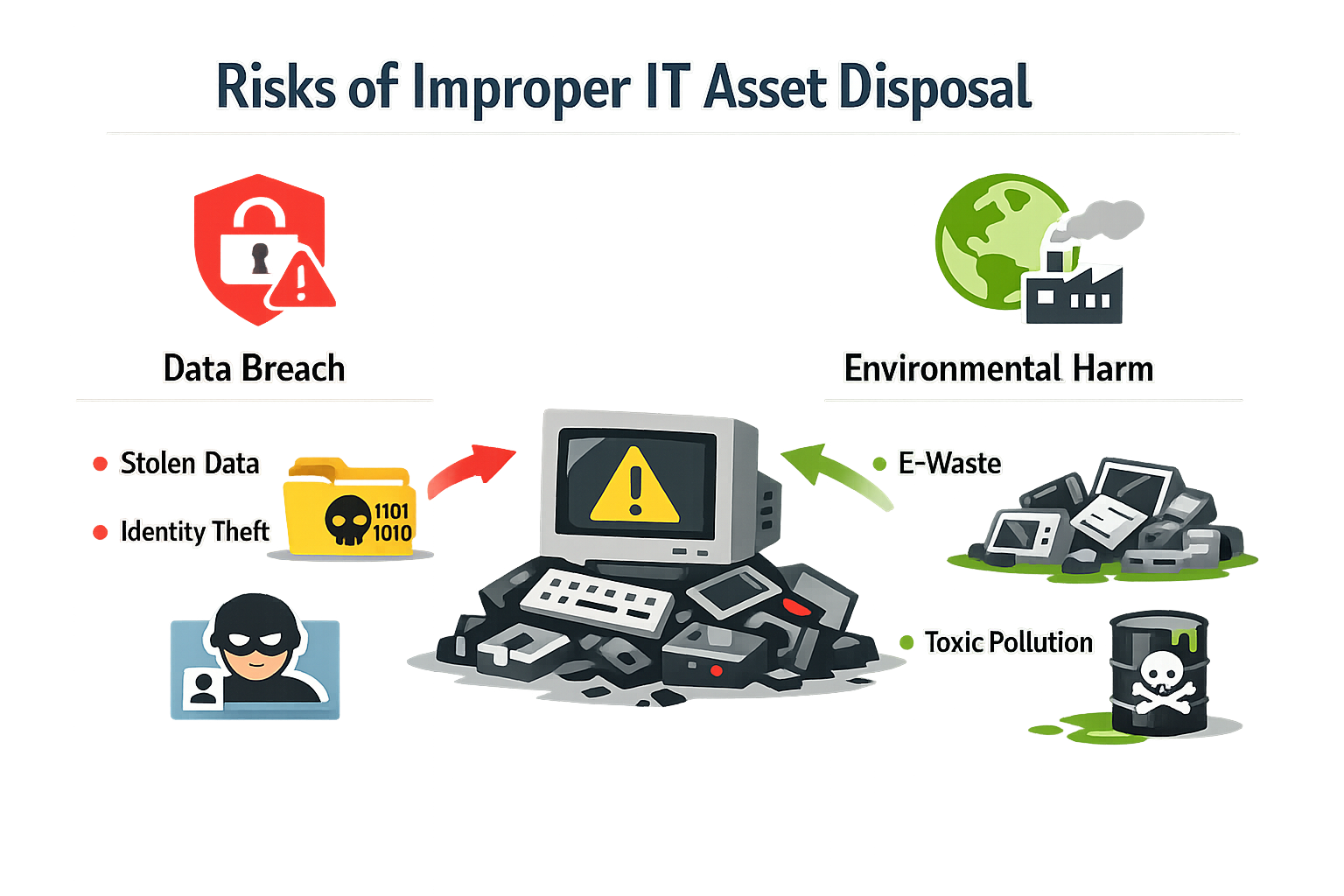
Improper IT asset disposition creates four kinds of exposure: data breaches from unsanitized devices, regulatory penalties under GDPR, HIPAA, and SOX, environmental liability tied to e-waste volume, and financial leakage from ghost assets. The failure mode is structural. Most organizations treat end-of-life hardware as a facilities problem — a truck shows up, equipment disappears, and the assumption is that someone downstream handled the data. That assumption does not survive audit.
The documentary record is where the exposure materializes. A certificate of data destruction is only as defensible as the chain of custody that produced it. When devices leave the building without serialized tracking, when subcontractors process assets without disclosed downstream relationships, when destruction methods are described in generic language rather than NIST-aligned technical standards, the paper trail collapses under regulatory scrutiny. In our editorial review of vendor profiles, the gap between what a certificate claims and what the underlying process can actually prove is the single largest risk factor in ITAD engagements.
The Regulatory and Financial Consequences
Regulators expect serialized chain-of-custody for the full retention period. Anything that touched regulated data — ePHI under HIPAA, customer records under GDPR, financial information under SOX — must be tracked individually, not in batches. The question the auditor will ask is not whether you hired a vendor, but whether you can produce a defensible record showing that specific serialized assets were processed under specific documented controls. If the answer is no, the exposure is material.
Environmental liability operates on a parallel track. E-waste volume triggers EPA disclosure requirements, and downstream processing that violates environmental standards creates upstream liability even when the contract language attempts to disclaim it. The operator's posture matters: a vendor with R2v3 or e-Stewards certification has submitted to third-party audit of their environmental controls, while an uncertified processor is an undocumented risk.
Financial leakage from ghost assets — equipment that left service but never left the asset register — compounds the problem. When IT teams cannot produce an accurate inventory at the start of an ITAD engagement, they cannot verify what the vendor actually processed. The cheapest vendor is the one whose paper trail you trust enough to hand the auditor without flinching. For a detailed breakdown of what proper disposal of IT assets requires in practice, the process documentation and audit mechanics are covered in depth elsewhere in our coverage.
The gap between what a certificate claims and what the underlying process can actually prove is the single largest risk factor in ITAD engagements.
Steps for Effective ITAD
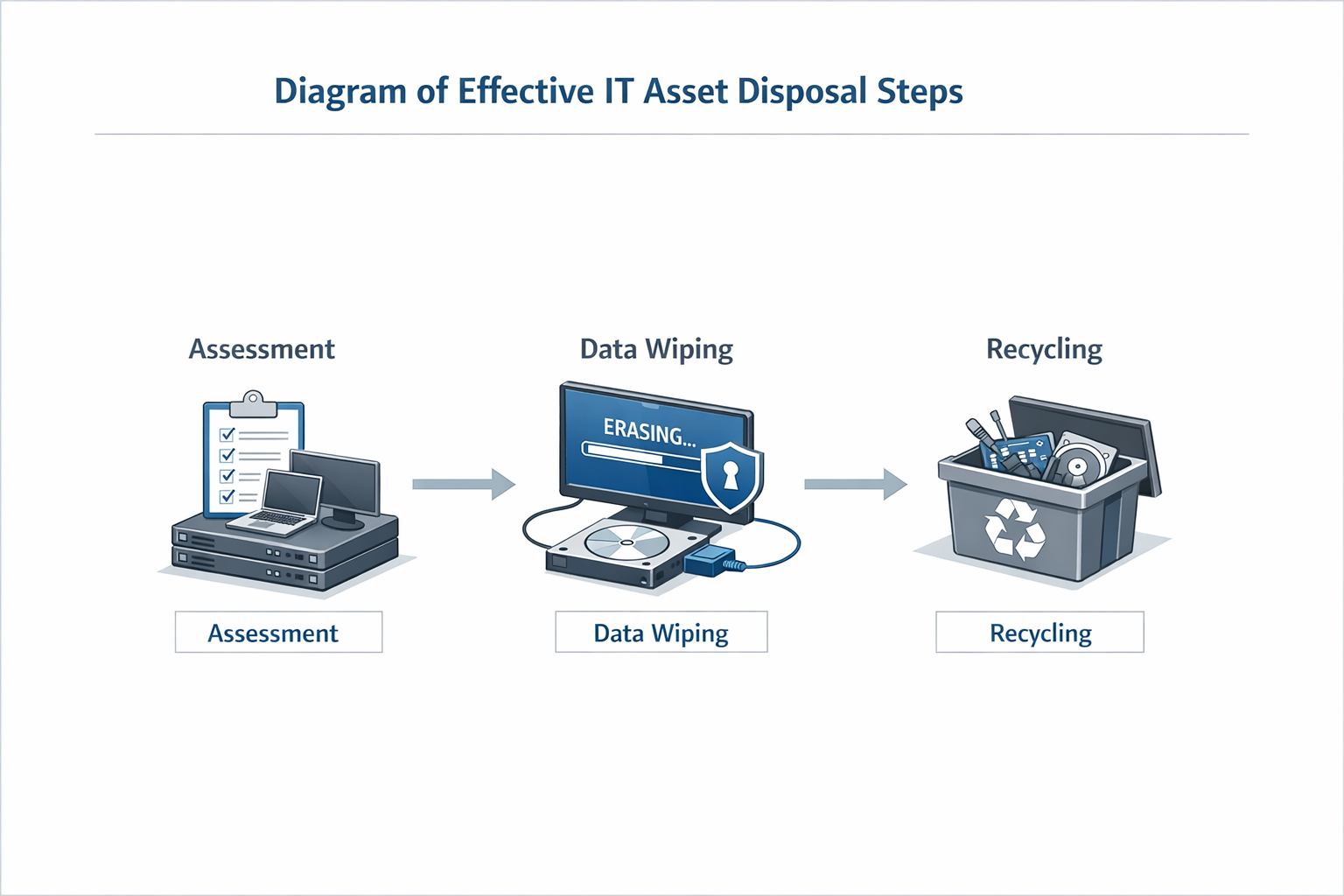
A defensible ITAD process is not a single transaction — it is a sequence of documented stages, each with its own audit trail and control requirement. The difference between a compliant disposition and a regulatory failure is not intent; it is the presence or absence of documentary evidence at each stage.
The following structure represents the operational sequence most enterprise-grade ITAD programs follow. The specific steps vary by vendor and engagement scope, but the underlying control logic remains consistent.
Asset Identification and Inventory Audit
Before any asset leaves your facility, you must know what you have. An inventory audit catalogs every device by serial number, model, location, and data classification. This is the foundation of chain-of-custody documentation — if an asset is not in the inventory, it cannot be tracked through disposition.
For regulated entities, the inventory must distinguish between assets that touched sensitive data (ePHI, cardholder data, customer PII) and those that did not. The data classification determines the sanitization method and the documentation standard required downstream.
Step 1
Catalog assets before vendor engagement
Document serial numbers, asset tags, and data-classification status before any vendor sees the list. Vendors price what they can see; if your inventory is incomplete, your bid is incomplete too.
Data Sanitization
Data sanitization is the technical process of rendering data unrecoverable. The method depends on the asset type and the data classification. Hard drives typically undergo NIST 800-88 compliant overwrite or physical destruction. Mobile devices may be cryptographically erased if the device supports it and the encryption was enabled during use. Network equipment — routers, switches, firewalls — requires configuration wipes that go beyond factory reset.
The sanitization certificate is the primary documentary defense in a post-incident review. It must specify the method used, the standard followed, and the serial number of the asset. A certificate that says "data destroyed" without naming the method or the asset is not audit-defensible.
For more on comparing sanitization methods and the certifications behind them, see How to Compare Data Destruction Services: Methods & Certifications.
Chain-of-Custody Documentation
Chain of custody is the documented record of who had physical control of an asset at every stage from internal decommissioning to final disposition. The record must include timestamps, signatures, and asset identifiers. If an asset changes hands — from your loading dock to the vendor's truck, from the vendor's warehouse to the downstream processor — each transfer must be logged.
In a regulatory review, the chain-of-custody record is what proves you maintained control. If the record has gaps, the regulator assumes the worst: that the asset was lost, stolen, or improperly processed.
Step 2
Require serialized tracking at every handoff
Demand that the vendor logs each asset by serial number at pickup, receipt, sanitization, and final disposition. Batch-level tracking is not sufficient for regulated assets.
Asset Valuation and Remarketing
Assets that retain functional value after sanitization can be resold. The valuation process determines fair market value based on age, condition, and demand. Remarketing recovers capital and offsets disposition costs, but it introduces a new risk: the resold asset must be sanitized to the same standard as a recycled one.
The financial benefit of remarketing is real, but it is not a reason to lower the sanitization standard. The certificate of data destruction must cover every asset, whether it is resold, recycled, or destroyed.
Vendor Selection and Verification
The vendor you select determines the quality of the process and the strength of the audit trail. Vendor selection is not a procurement exercise; it is a risk-transfer decision. The cheapest vendor is the one whose paper trail you trust enough to hand the auditor without flinching.
Look for vendors with third-party certification (R2v3, e-Stewards, NAID AAA) and published verification of their sanitization and downstream processes. A vendor's marketing claims are not evidence; the certification body's published directory is.
Step 3
Verify certification status independently
Do not accept a vendor's self-reported certification status. Check the certification body's public directory to confirm the vendor's current standing and scope.
Environmental and Regulatory Reporting
The final stage is reporting. Depending on your jurisdiction and industry, you may be required to report the volume and type of electronic waste processed, the methods used, and the downstream processors involved. Even when reporting is not mandatory, maintaining the record is a defensive posture.
The report should include total asset count, sanitization method by asset type, weight of material recycled, and the names of downstream processors. If an asset was resold, the report should include the buyer's name and the sanitization certificate reference.
The question the auditor will ask is not whether you disposed of the asset — it is whether you can prove you disposed of it correctly.
Best Practices for Non-Technical Stakeholders
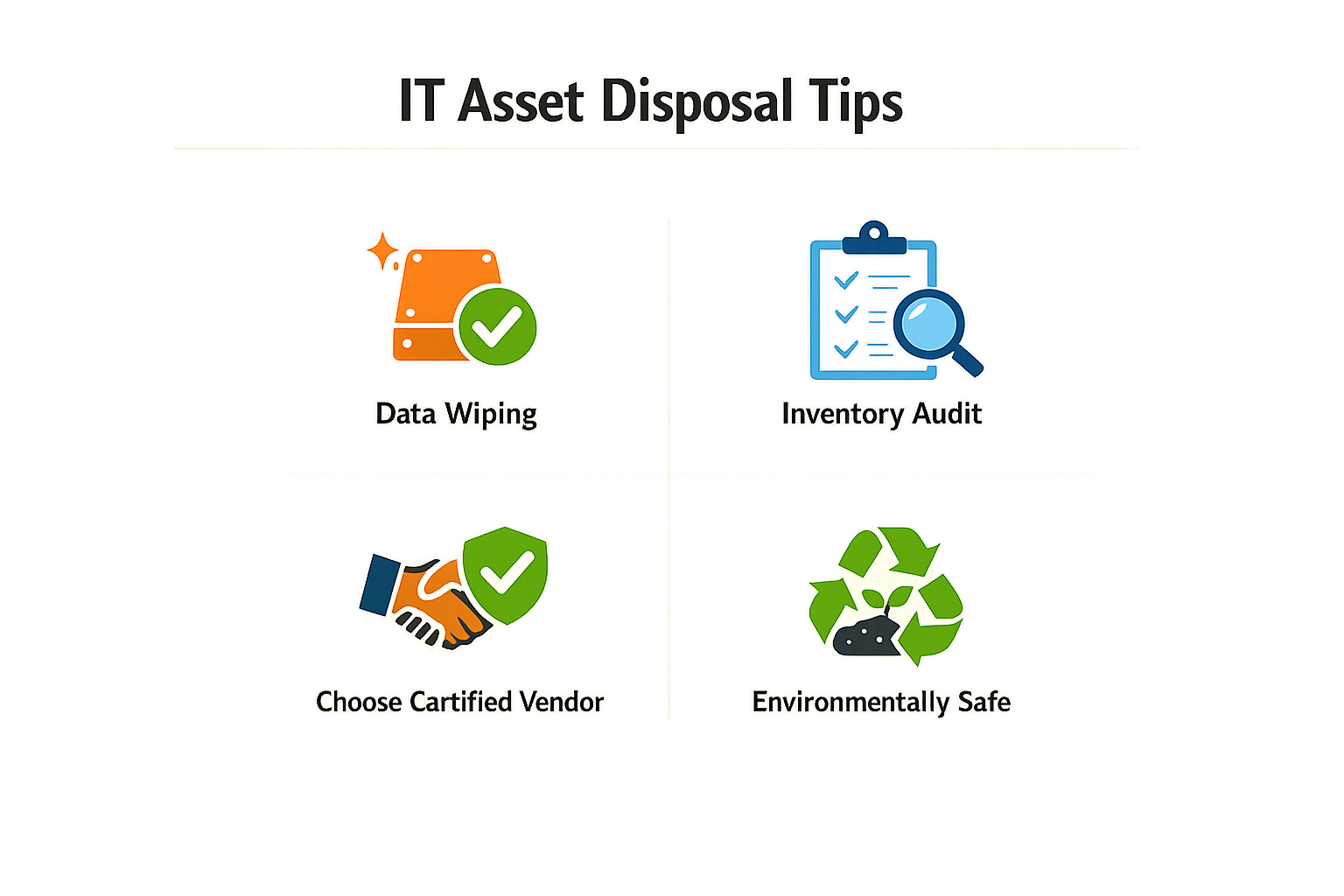
Non-technical stakeholders — CFOs, compliance officers, procurement leads — typically own the budget and risk posture for ITAD, but rarely the technical vocabulary. The gap between what the IT team describes and what the audit committee needs to hear is where control failures emerge. The following practices close that gap.
Require Certification, Not Just Compliance Claims
Professional ITAD providers must hold certifications like NAID AAA, R2, or e-Stewards to ensure secure and ethical management of retired assets. A vendor's marketing deck may describe "industry-leading security," but the certification body's published audit report is the documentary record that survives regulatory review. When evaluating proposals, ask for the certification number, the issuing body, and the most recent audit date. If the vendor cannot produce all three in under sixty seconds, the certification posture is not audit-defensible.
Conduct an Asset Audit Before Engaging a Vendor
Organizations should conduct an asset audit as the first step in the ITAD process to document all IT equipment, which aids in data destruction planning and value recovery assessment. The audit creates a serialized inventory — make, model, serial number, location, and data classification — that becomes the baseline for chain-of-custody tracking. Without this baseline, the certificate of data destruction the vendor provides at project close has no anchoring document. In a post-incident review, regulators will ask what you handed the vendor and what the vendor certified as destroyed; if those two lists do not reconcile, the documentary record has a gap.
Step 1
Inventory before bidding
Catalog every asset by serial, location, and data-classification status before any vendor sees the list. Vendors price what they can see; if your inventory is fuzzy, your bid is fuzzy too.
Understand the Four Pillars of a Compliant ITAD Program
A compliant ITAD program rests on four pillars: data security, regulatory compliance, value recovery, and environmental responsibility. Each pillar translates to a specific line item in the contract and a specific deliverable at project close. Data security maps to certificates of data destruction with serialized asset lists. Regulatory compliance maps to documented adherence to frameworks like NIST 800-88 or GDPR Article 17. Value recovery maps to a settlement statement showing residual-value credits. Environmental responsibility maps to downstream-processor documentation and e-waste diversion rates.
For a deeper breakdown of what falls under the ITAD acronym and how these pillars connect to operational risk, see our guide on ITAD meaning and what IT asset disposition actually covers.
The cheapest vendor is the one whose paper trail you trust enough to hand the auditor without flinching.
Ask What Happens Downstream
The vendor you contract with is rarely the final processor. Drives go to a destruction facility, working units go to a refurbisher, and commodity scrap goes to a smelter. Each handoff is a point where chain-of-custody can break. Ask the vendor to disclose all downstream processors by name, certification status, and geographic location. If the vendor describes downstream relationships as "proprietary" or declines to name processors, the chain-of-custody documentation will not survive audit.
Conclusion: The Importance of ITAD
The ITAD acronym represents a discipline that sits at the intersection of regulatory compliance, environmental responsibility, and operational risk. For non-technical stakeholders, understanding ITAD means recognizing that every retired device carries three distinct exposures: the data it held, the regulatory obligation it triggered, and the environmental liability it created. None of these exposures disappear when the device leaves the building.
In regulated environments, the documentary record is the primary defense mechanism. Proof that every asset was wiped and disposed of according to policy is not optional—it is the artifact that survives audit and the document that determines whether a post-incident review becomes a consent order. The ITAD industry is growing rapidly, driven by the continued proliferation of data-bearing devices and the expanding regulatory perimeter around them. The operator who treats ITAD as a procurement checkbox rather than a risk-management process is building a compliance gap that compounds with every refresh cycle.
The Comprehensive Posture
Weakness in any one stage of ITAD—inventory, data destruction, physical processing, or documentation—undermines the others. A vendor with strong physical destruction capabilities but incomplete chain-of-custody documentation leaves the enterprise exposed in exactly the scenario where documentation matters most: the regulatory inquiry that arrives eighteen months after disposal. The comprehensive approach requires alignment across IT operations, procurement, legal, and compliance, with each function understanding its role in the documented chain.
For stakeholders building or evaluating an ITAD program, the question is not whether the vendor can destroy a device—it is whether the vendor's process, documentation, and downstream accountability will hold up when scrutinized. The ITAD meaning extends beyond the mechanics of disposal to the structural question of who is accountable, for what, and on what timeline. The cheapest vendor is the one whose paper trail you trust enough to hand the auditor without flinching.
The enterprises that treat ITAD as infrastructure rather than overhead are the ones that avoid the Morgan Stanley failure mode: the $100M+ regulatory cost that stems not from malicious intent but from structural gaps in the disposition process. In our editorial review of vendor profiles and certification postures, the operators with the strongest programs are those who recognize that ITAD is not a technical problem solved by a vendor—it is a governance problem that the vendor executes under the enterprise's documented control.